
On 4 June 2026, the Institute of African Studies (IAS) of the University of Ibadan (UI) and IFRA-Nigeria, held the latest conference in the “Imagine(d) Africa” series. Their guests were Dr Elodie Apard, researcher at the Institut de Recherche sur le Développement and Unité de Recherche Migrations et Société, and Flora Enifo, project manager and co-founder of the Mission d’Intervention et de Sensibilisation contre la Traite des êtres humains (MIST). Together, they introduced their collaborative work at the crossroads of scientific research and social engagement in a presentation titled “Studying sex trafficking: why and how? Perspectives from a collaborative research experience.”
After introductions by Professor Sola Olurinyomi, director of the IAS, and Dr Pauline Guinard, director of IFRA-Nigeria, Dr Apard began by presenting the scientific aspect of their work. Between 2015 and 2020, while Dr Apard worked at IFRA-Nigeria, there was a significant amount of interest on trafficking in Europe, which led her to develop a research project on the topic, in collaboration with UI and the University of Benin (UniBen). However collaborative and interdisciplinary this project was, she noted issues of power dynamics remained due to the different status of the team members, from expatriates to Nigerians, and permanent researchers to independent and PhD students. Moreover, the issue of inclusivity regarding the victims of sexual trafficking still remained.
In addition, in the last two decades, especially with the collapse of the Libyan regime in 2011 and the subsequent rise in migration from Africa, sex trafficking became a major subject of interest for governments and the media. However, in the latter, the topic was often sensationalised and its coverage often hypersexualised women’s bodies. For the former, sex trafficking became a potent political argument for those seeking to curtail all forms of migration to Europe.
Therefore, when, upon returning to France in 2020, Dr Apard was asked to become a part of MIST’s board, they decided to avoid both the limits of her initial research project, and the pitfalls of the emotionally focused media coverage of the topic. As a result, the first step in their collaboration was to think together of a new way to conduct research.
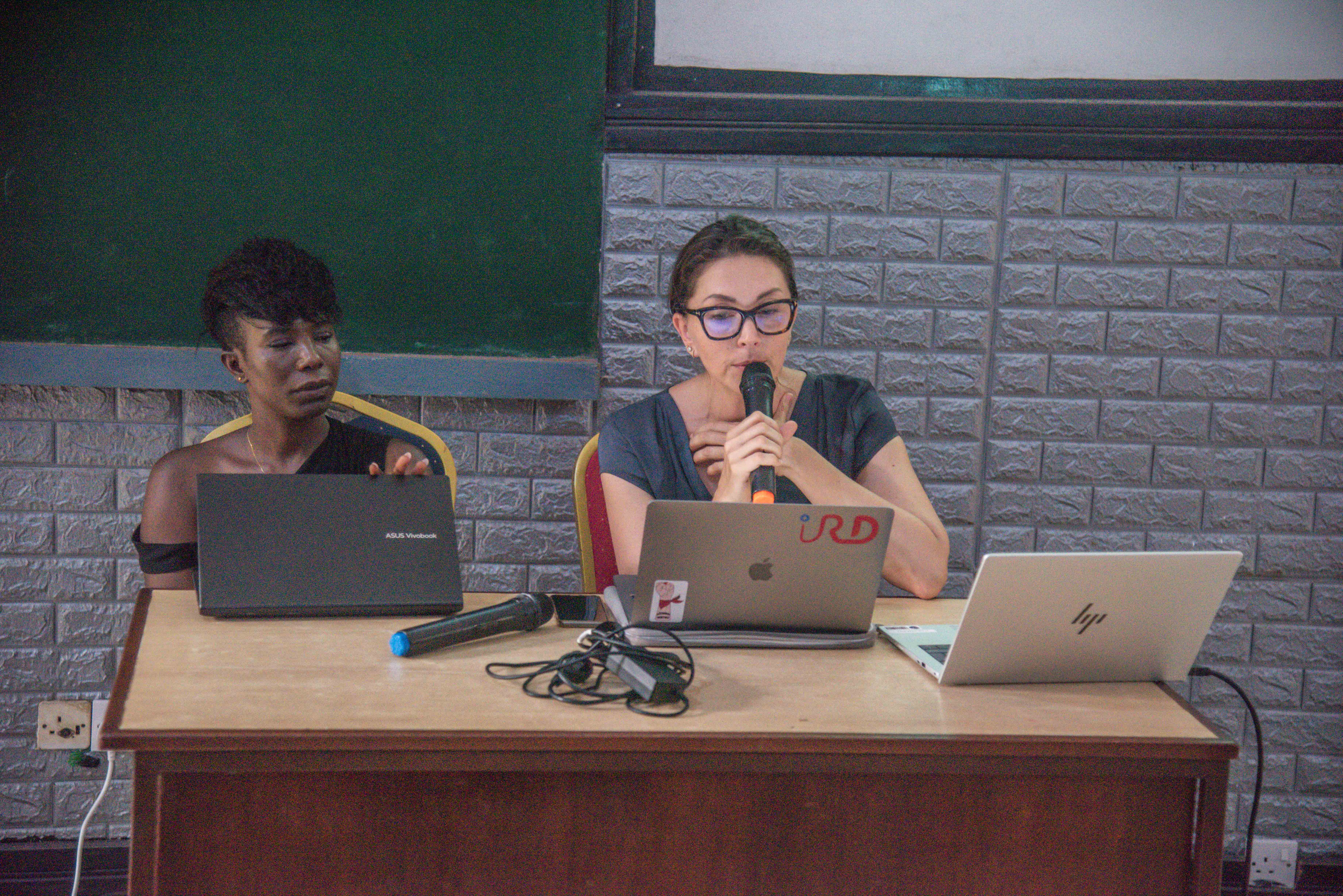
Ms. Flora Enifo (left) and Dr Elodie Apard (right)
The first aspect of this new research was to adopt a reciprocally beneficial approach, that was also multi-sited and collaborative. For this, they developed new research methods, such as the analysis of the same data by people from different disciplines and from African and European institutions. Following this same logic, they also decided to conduct fieldwork together, to ensure that each researcher brings their own unique perspective to the same situation.
Secondly, the integration of the survivors and the respect of their voices was paramount to this new perspective. As such, the work is based on a true free and informed consent from the women, which includes being fully transparent on the purpose of the research. To do this, she also wished to create long-term reciprocally beneficial relationships with the first concerned, as opposed to punctual interviews that usually only benefit the researcher.
With those objectives in mind, MIST began by organising discussions by and for MIST members, on their chosen topics. These became the TRUE TALK podcasts ( https://mist-association.org/en/podcast-uk/). These discussions were a way for them to express themselves, but can also constitute valuable research materials, while ensuring the women retain control over their own voice and are not directed by a researcher’s prompts.
Other activities include the History/Ourstory workshop, in which they connect their individual experience with moments of global history such as slavery or the fight for civil rights in the US. The goal of this activity is to understand their mobilisation not only at the individual level, but also as related to a global history of struggle.
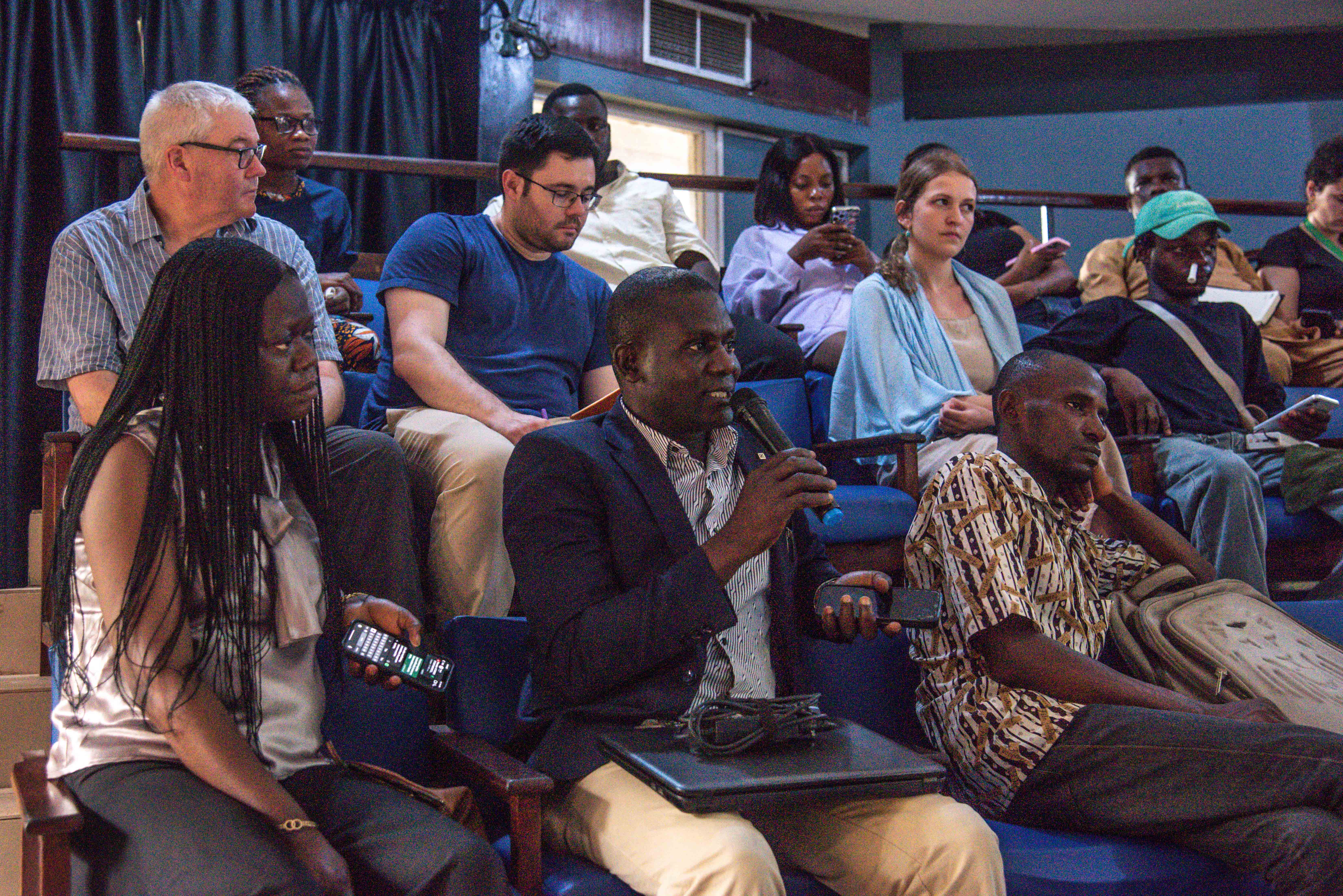
Audience members during the Q&A session
Next, Flora Enifo explained that the creation of MIST, the first survivor-led organisation in France, originated from the desire to create a space for inclusion of the women who went through sex-trafficking, and to contribute meaningfully to their reintegration. To do so, they use two main methods: peer support and community organising.
First, peer support is a way for MIST members and employees to fully support a woman survivor of sex trafficking in getting justice, employment, accommodation and much more. This process also comes with a mandatory psychological counselling. As this work is time-consuming, it is largely done by employees of MIST.
Next, Flora Enifo explained that community organising is a key method, which makes possible a long-lasting movement. For example, MIST members themselves wrote the association’s internal rules, they have two delegates in charge of managing conflict within the organisation, as well as two official spokespersons. One of their most significant activities is the training of police officers in how to better handle victims.
She also insisted on the importance of reciprocal relationships, as did Dr Apard. She explained that this meaningful collaboration with researchers was a way to contribute to their goal. Inversely, they usually refuse to interact with the media, if their piece does not have a significant and relevant political component.
She also insisted on the vocabulary used. Though she does use “survivor” for non-expert audiences, within the association and with specialists, MIST members decided to use the term “first concerned” (in French “premières concernées”). This term keeps the women at the centre of the conversation, while allowing them to grow past the “victim” or “survivor” status in their personal lives.
Nevertheless, they face obstacles. First, when it comes to women still suffering from sex-trafficking, they often lack knowledge of the law, and are held back by a fear of stigma, the necessity of survival as well as the language barrier between them and the French institutions. In the professional realm, many actors fighting sex trafficking doubt the capabilities of MIST members, seeing them first and foremost as “victims.”
Dr Delphine Manetta, IFRA-Nigeria deputy director, offered some comments on their intervention. Audience members asked their questions and offered their comments in a lively Q&A to conclude the event.
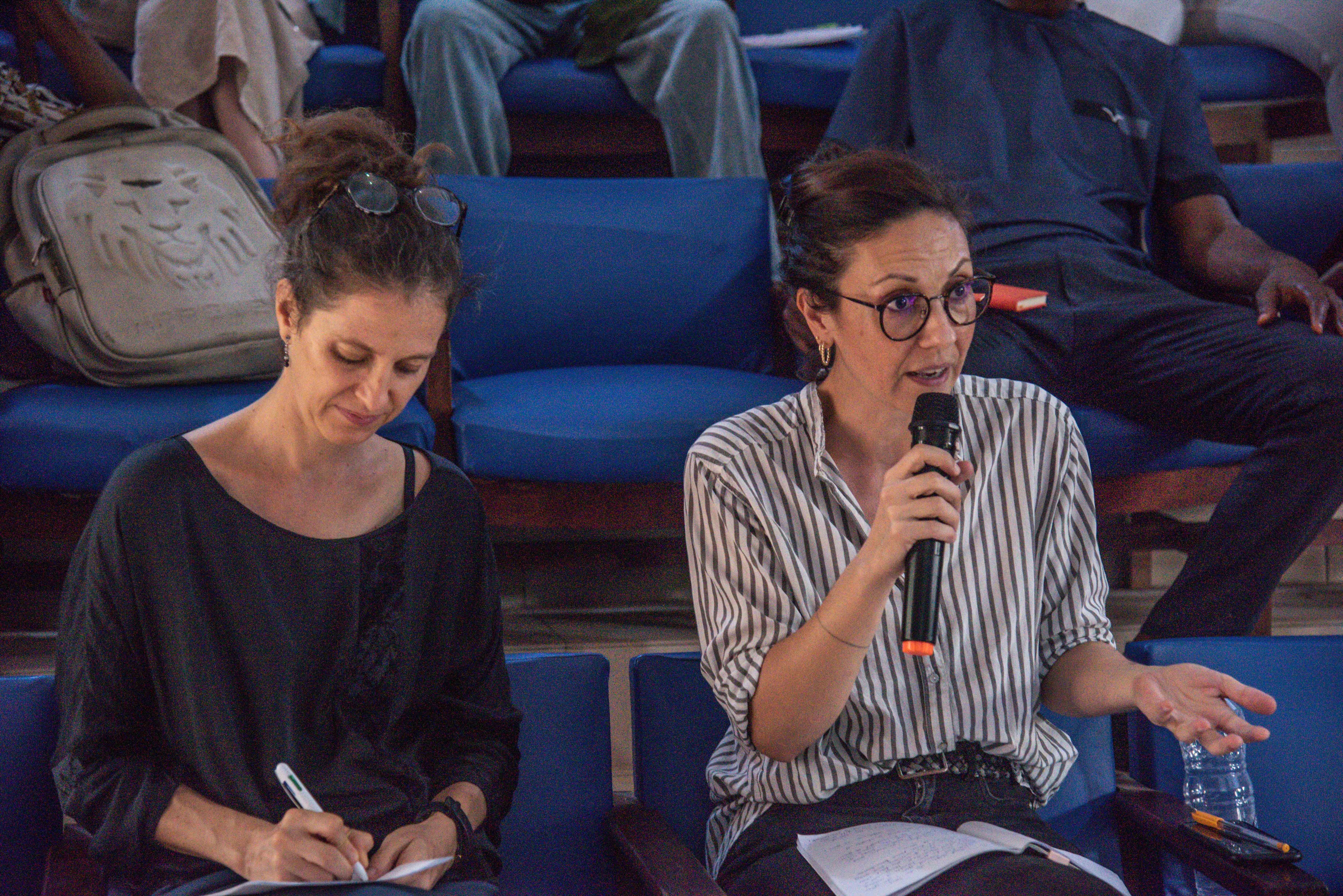
Dr Delphine Manetta (right) offering comments on the presentation