
On 20 May 2026, IFRA-Nigeria, in partnership with the National Museum of Unity in Ibadan, hosted the public presentation of projects conducted as part of the research and artistic creation initiative ‘(Re)imagining Heritage, (Re)using the Museum’. The initiative aimed to explore innovative ways of engaging with heritage, culture, and museum spaces through research and artistic creativity. This event took place under the Nigerian Alternative Heritages project, made possible by the French Embassy Fund.
You can watch a highlight of this event on our YouTube channel: https://youtu.be/de5PV_7WhKg.
The public presentation featured four teams, each with distinct project formats and outputs, followed by a roundtable discussion with representatives from each team to discuss their project aims, methodologies, and impacts. The artistic outputs included:
● A stage play titled ‘Voices of the Sacred’, by the Museum of Unity, Ibadan team;
● An animation, ‘Animating Artefacts’, by Abibat Ibrahim and Sorple Sheed;
● A documentary titled ‘The Museum as a Performance Piece’, by Ayodele Olofintuade and Kehinde Awofeso;
● A multimodal installation titled ‘The City Beneath’ by Mofeyiseke Bolaji, Neec Nonso, and Dikachi Ugwu.
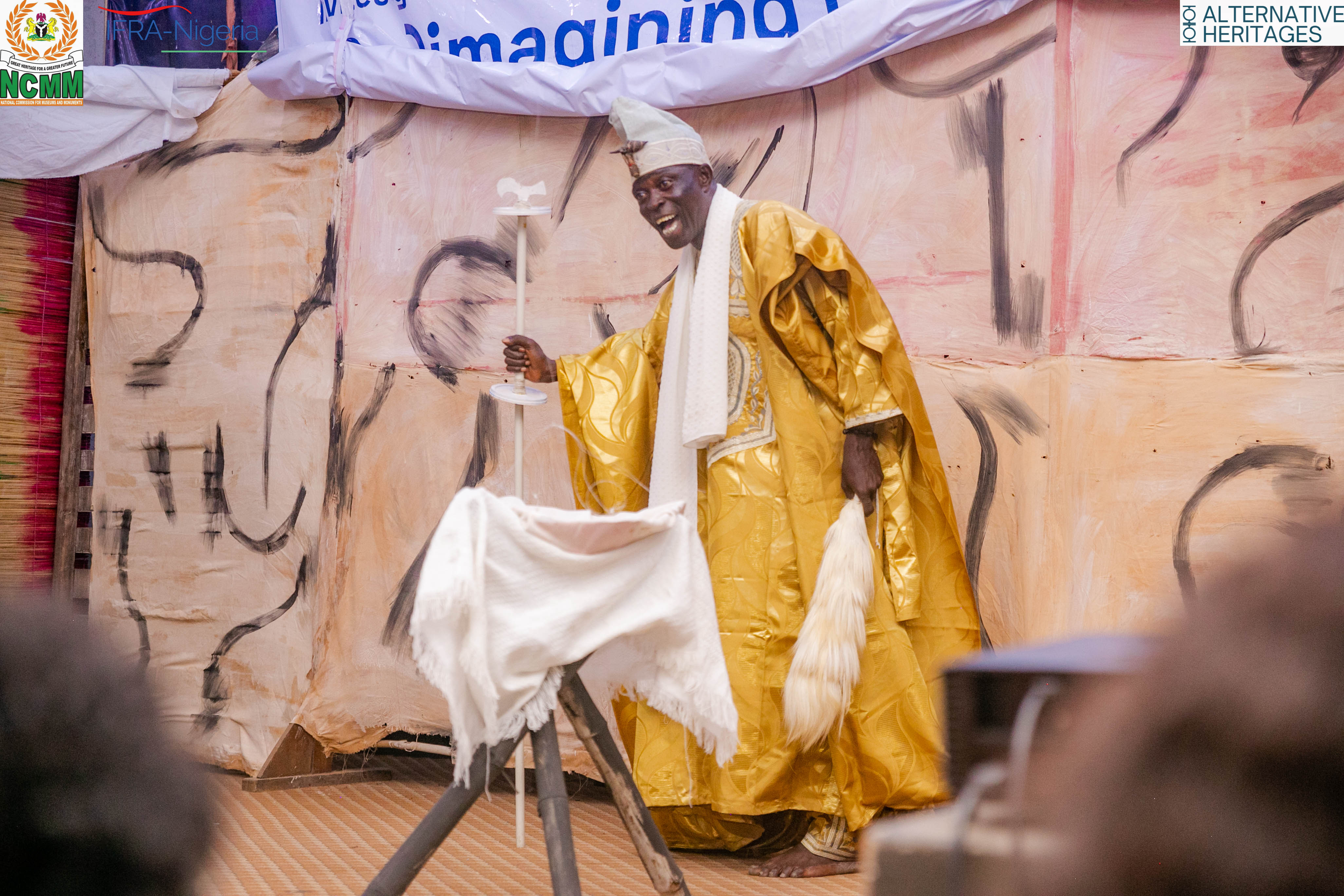 Scene from the 'Voices of the Sacred' stage play
The 'Voices of the Sacred’ stage-play featured dancing, drumming, chanting, and theatrical re-enactments of Yoruba deities such as Sonpona, Orisa Oko, Oro, and Orunmila and health practices. Next, Ayodele Olofintuade and Kehinde Awofeso showed participants their documentary, ‘The Museum as a Performance Piece’, which explored Yemoja and other Orisa practices at the Yemoja Temple in Gbodu, Ibadan, Nigeria. The film included a guided tour of Orisa-related objects in the museum, with Orisa practitioners from Ibadan.
Abibat Ibrahim and Sorple Sheed’s ‘Animating Artifacts’ allowed participants to engage with heritage through digital storytelling, transforming stories of Gelede, Ekoi, Gbonka, and Sango into animated narratives aimed at younger audiences. Mofeyiseke Bolaji, Neec Nonso, and Dikachi Ugwu’s ‘The City Beneath’ combined a night market exhibition with augmented reality, offering an immersive heritage education experience through local market simulations. The installation featured interactive displays of fruits, vegetables, yams, and yam flour to recreate an authentic local market environment. The augmented reality component demonstrated that museum spaces do not erase historical truth but instead validate and strengthen cultural engagement for broader, modern applications.
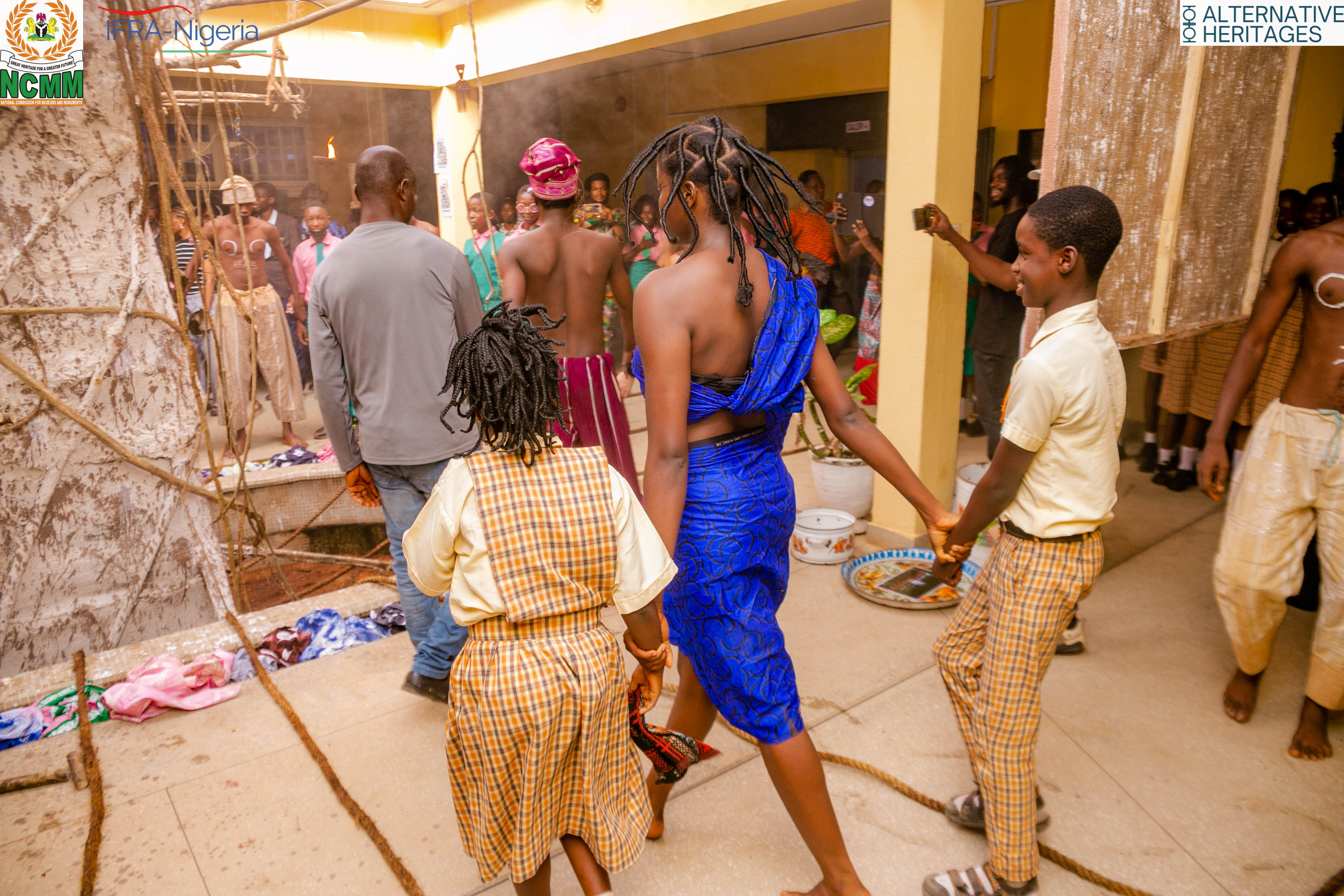 Schoolchildren participating in the ‘The City Beneath’ multimodal installation
The roundtable discussion of researchers, moderated by Dr Pauline Guinard, centred on themes of cultural ownership, presentation and representation, as well as alternative historical perspectives. During the session, the moderator asked how the teams had defined their research questions; panellists explained that the project sought to shift perceptions of museum artefacts from passive, silent displays to dynamic representations of living culture. They highlighted key research methods, including ongoing dialogue, interviews with indigenous custodians, visual experimentation, and the negotiation between academic frameworks and creative interpretations.
When asked about the interdisciplinary relations between researchers and artists, the panellists described their process of sharing and refining ideas through collaboration. On methodology, they employed interviews and engagement with custodians and emphasised the integration of artistic expertise with academic rigour. Regarding the choice of project outputs, they explained that these formats aimed to present museum objects in more meaningful ways, not just visually but through storytelling and cultural representation. Ayodele Olofintuade prompted the audience to consider what heritage is and who owns it, as they all asserted that the objects in the museum’s collections are not merely relics of the past but living heritage.
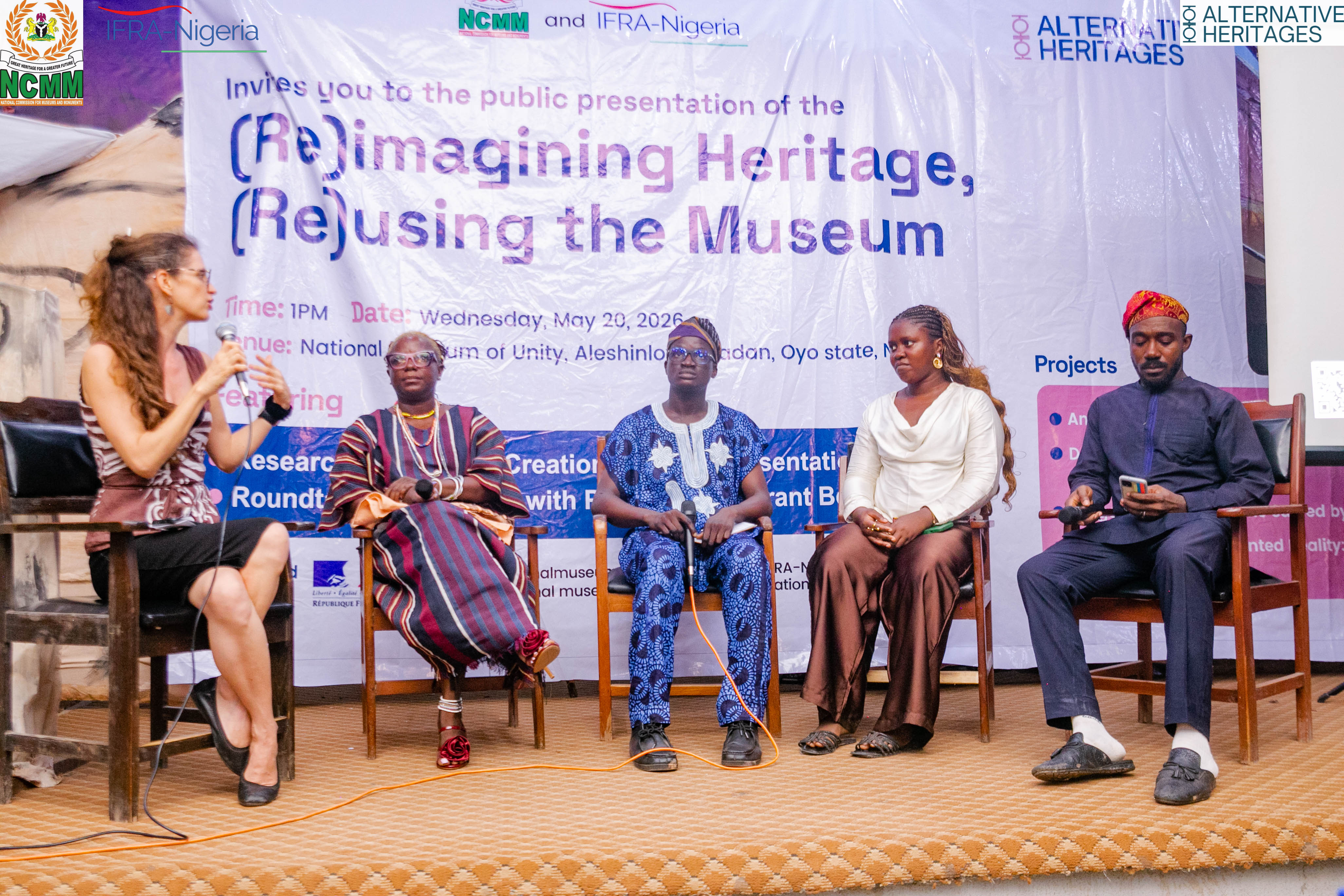
Rountable of researchers moderated by Dr Pauline Guinard (left), with (from left to right) Ayodele Olofintuade, Mr Emmanuel, Abibat Ibrahim and Mofeyiseke Bolaji
The presentations and ensuing discussions examined the relationship between museum spaces, artistic collaboration, and living heritage, contending that museums should move beyond being static repositories where history is preserved behind glass. Instead, they should function as active cultural spaces that encourage dialogue, creativity, and participation. For the grant beneficiaries, these collaborative projects challenge outdated perceptions of museum objects, positioning heritage as an active part of community identity, memory, and belonging. They also addressed contemporary threats to heritage preservation, including the tendency to view artefacts as lifeless objects and the misconceptions that demonise or reduce indigenous beliefs to fear-based narratives. The participants emphasised the need for deliberate preservation efforts through interdisciplinary research, digital storytelling, artistic collaboration, and public engagement.
The interactive session following the panel discussion allowed the audience to ask thoughtful questions, including debates on whether art can be used to challenge dominant political or historical truths, and collaborative reflections on how to keep artifacts from being "imprisoned" within static museum display cases. In response to a query on whether technology could alter the presentation of reality in exhibitions, it was explained that art serves as a powerful tool for challenging dominant narratives, revisiting forgotten histories, and presenting alternative truths. One schoolchild asked whether it was wrong for an individual not to accept traditional deities such as Esu as part of their ancestral heritage. This prompted further discussion on the distinction between cultural appreciation and active religious participation. Ms Adejoke Rafiat Adetoro, while anchoring this session, reinforced the panel’s point on the historical and cultural value of indigenous knowledge systems, reiterating that acknowledging the existence of indigenous deities does not necessitate worship or adherence to traditional religion. Participants reflected on how dominant historical and religious narratives shape contemporary attitudes towards indigenous spirituality, particularly the automatic demonisation of traditional practices.
Overall, the presentations demonstrated that indigenous knowledge systems hold significant potential for fostering community pride, alternative education, and the revitalisation of public cultural spaces. The programme also provided an interactive and intellectually stimulating environment for participants to explore alternative heritages through immersive experience in the artistic creation and shared collective memory.