
On 17 February, Yemisi Olawale, PhD candidate at the Department of History, University of Ibadan, presented his work in IFRA-Nigeria’s methodological seminar.
His focus is on the history of Yoruba Nigerian migrants to the Ashanti region of Ghana, from 1970 to 2021. In particular, his interest lies in the “return migration” and the process of reintegration of the migrants forced to leave the country following the 1969 Ghana Aliens Compliance Order.
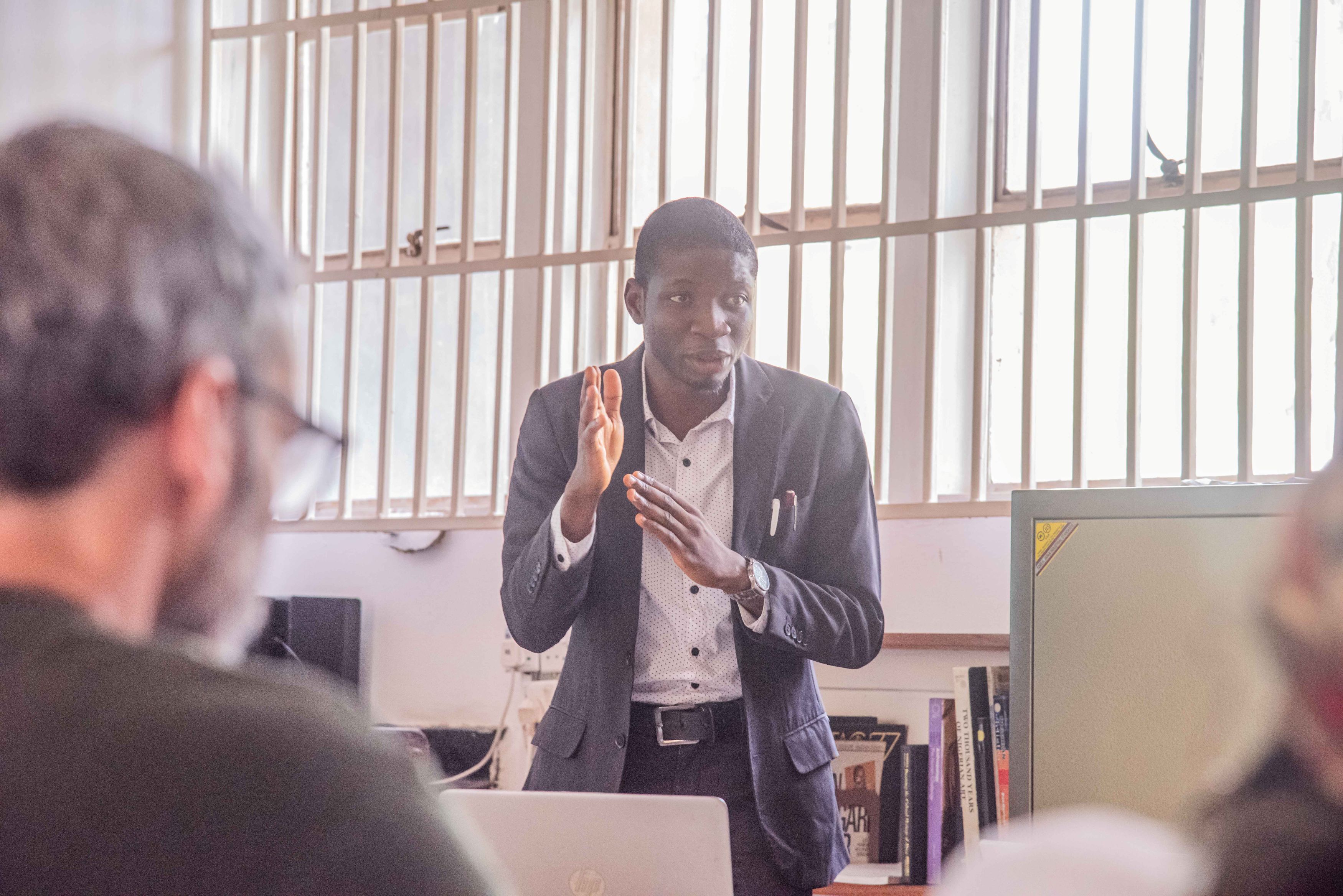
Yemisi Olawale
His presentation began by addressing the challenge of travelling, the administrative obligations and the hurdles of crossing borders. His fieldwork started then, as he chose to travel the same way the traders he intended to study did. He emphasized how this experience allowed him to better understand the circumstances and emotional aspects of the move to Ghana.
Concerns about security, the language barriers and navigating local institutions are part of most fieldwork experiences. In his case, the question of dress, and how to blend in the local population, was also a way to push past those initial barriers.
His work in Ghana was divided in two parts : archival research and fieldwork. For the first part, he noted the importance of not limiting yourself to documents strictly on your topic, but to broaden the search to obtain better results. He also emphasized the need to prepare the fieldwork in advance, for example by creating a timeline of relevant events, noting the references of documents to consult seen in other articles, identifying relevant methods etc.
Relationships are also central to the research. First, the link with the PhD supervisor who can offer resources to conduct a successful fieldwork. Second, the many connections one creates in the field. Often, the researcher will come to make friends with key persons, such as the archivist, which can eventually help his own research. Moreover, he noted that he gained acceptance into the Yoruba community by emphasizing his own origin, bounding around a similar language and close hometowns. Negotiating one's identities is essential in the field: presenting yourself as a student, a lecturer, here a Yoruba/Nigerian, can vastly impact how people perceive you, and their willingness to collaborate.
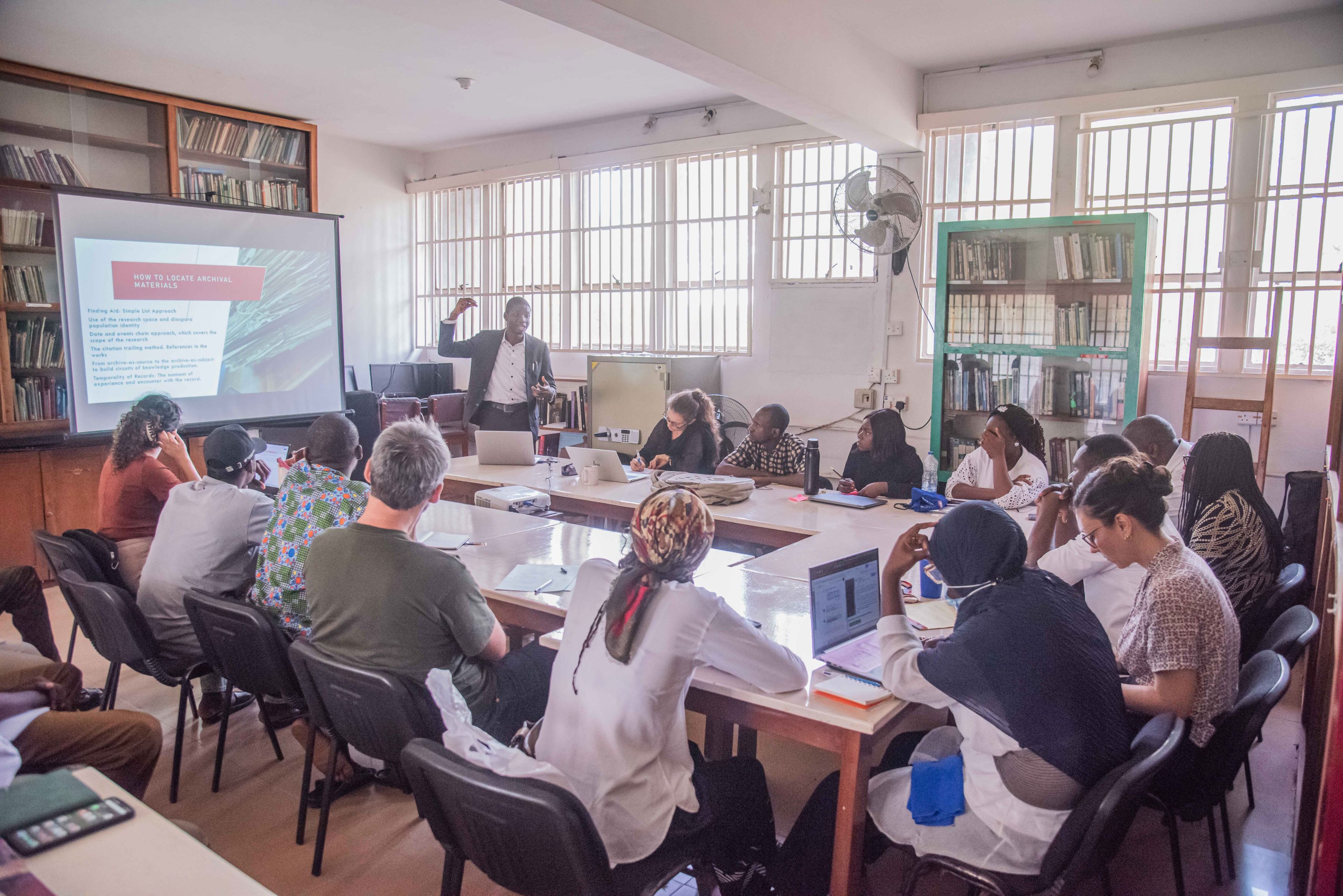
Students and researchers attending the methodological seminar at IFRA-Nigeria Resource Centre
As an historian, Yemisi Olawale decided to look beyond archival sources and pursue fieldwork research. His methods included participant observation, in-depth interviews and life histories. He faced several challenges. First, identifying the migrants in the community, as most of them now speak twi. Second, choosing relevant informants. Just as importantly, he emphasized the need to embrace spontaneous interviews when relevant, and to let go of people who are too difficult to get an interview from. Third, getting interviews. Indeed, as members of the Nigerian Yoruba in Ghana face xenophobic attacks, many were reluctant to give interviews, and even more to be recorded. There, written field notes and field diaries played a key role, avoiding using his phone allowed a level of trust to be established.
Finding a key location can be a very important step in the fieldwork. In his case, it was a Baptist church nearly exclusively frequented by the Yoruba community. There he created connections and through them secured many interviews.
He concluded by highlighting difficulties he faced. The cultural shock can be challenging and eventually lead to tiredness. Generally, the initial motivation for fieldwork fiddles as time passes. For him, taking days away from the field was beneficial, not only to rest, but also as an opportunity to look back on his notes, revise his work and get a new perspective on his research.
The discussant for this seminar was Stefan Le Courant, anthropologist and researcher at IFRA-Nigeria, who opened the discussion on the topics of how the interlocutors define themselves, and theory as a tool to go deeper during the fieldwork. This intervention was followed by a Q&A session with the participants.
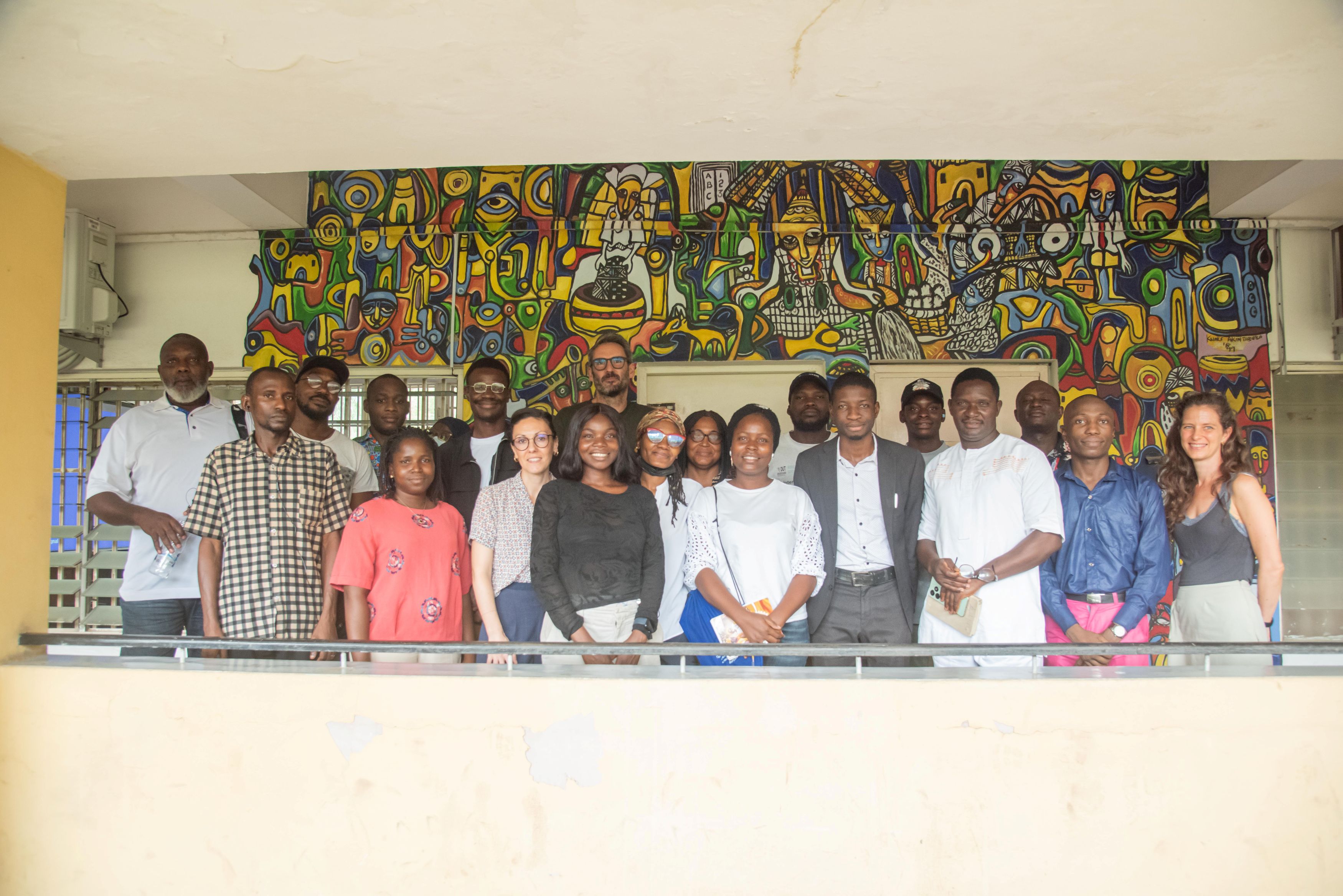
Participants to Yemisi Olawale's methodological seminar