On 31 March, IFRA-Nigeria welcomed Dr Shina Alimi, associate professor from the Department of History at Obafemi Awolowo University, for our March methodological seminar.
Dr Shina Alimi began his career as a historian with the exploration of print media, and progressively developed the notion that it is necessary to go beyond the surface of the colonial archives, to understand the silences of history. Looking for unconventional sources of knowledge, he turned to colonial advertisements, in particular those dedicated to medical or hygiene products, asking: how did colonial advertisements medicalise black bodies? How did this make the body an object to be reformed through consumption? Can we read advertisements as ethnographic archives?
After offering basic definitions of advertisement and medicine, Dr Alimi explained the importance of colonial newspapers as dense cultural texts through which colonial knowledge is circulated and naturalised itself. By exploring their archives, Dr Alimi was able to call attention to the way the black body was racialized and objectified in order to sell products and to be sold products to.
Advertisements for soaps, antiseptics and pharmaceuticals frequently framed the African body as inherently vulnerable, and therefore in need of an intervention to be fixed, a solution those products can provide. In this way, advertisements both represent and perpetuate a vision of a fragile black body, all the while creating a new field of consumption.

Dr Shina Alimi
Black bodies in colonial Nigeria were also disciplined through the promotion of hygiene and sanitation. The advertisements deployed the language of cleanliness, both moral and corporeal. The body therefore appears as reformable, through acts of consumption.
His research also highlights the intersection between consumption and modernity, the studied documents revealed the development of a hierarchy of civilisation determined by European standards. This included a hierarchy of healthcare, with the scientific and Western-borne methods’ legitimacy taking over more traditional medicine. Exemplifying this is the use of medical language or figure in many advertisements. He therefore observes a double process: advertising functions as a popularizing medium for “colonial” science, while the use of medical authority lent credibility to those new products.
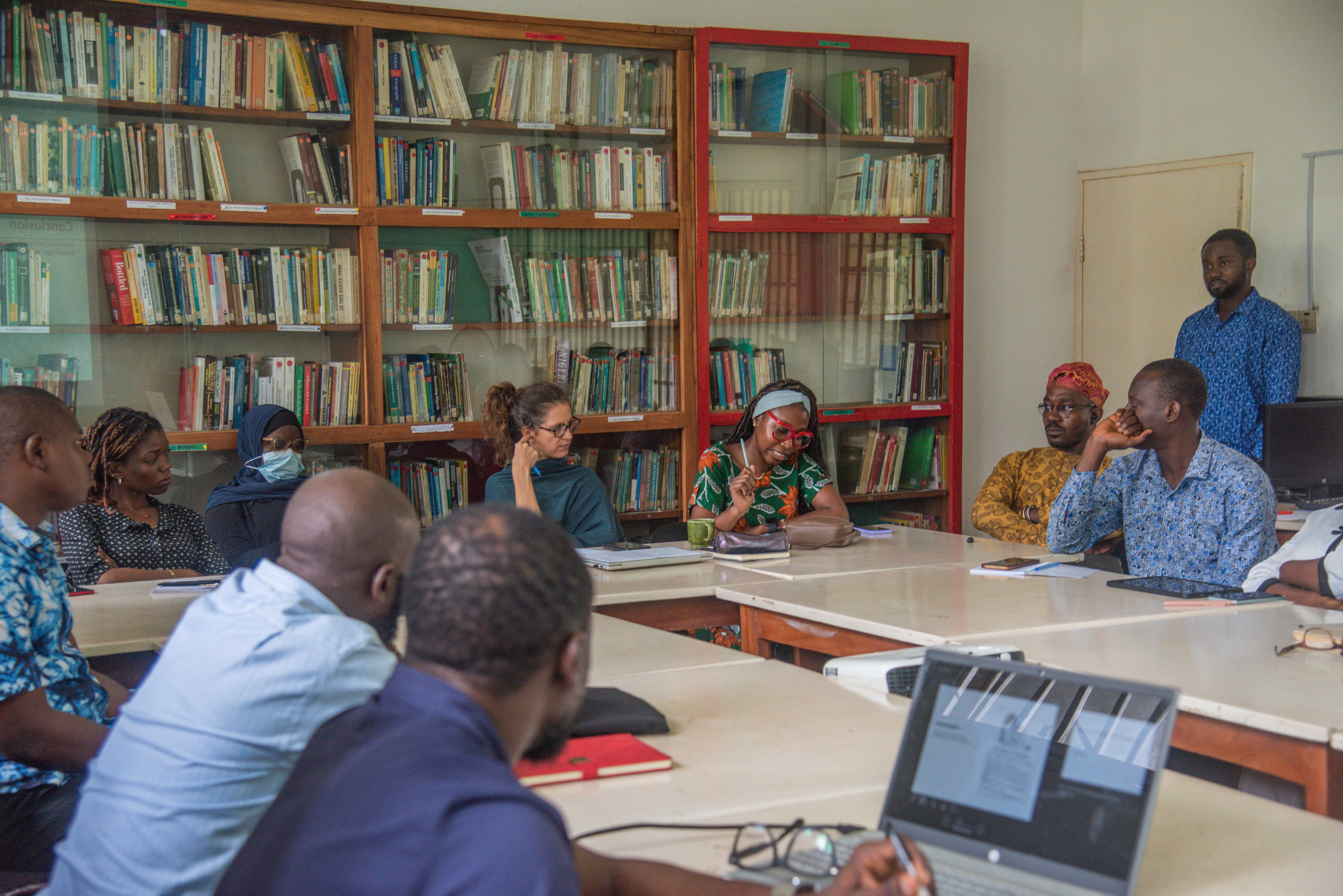
Dr Alimi exemplified his arguments with many examples of advertisements, and gave the floor to participants, by asking them to offer their own analysis on two specific documents. He concluded by offering last thoughts on advertisements as archives, and how they open new possibilities to understand colonial dynamics. Whereas official medical reports often present themselves as objective, advertisements are saturated with cultural assumptions, anxieties and desires. They reveal how colonial ideologies were translated in everyday language and imagery.
This session was followed by a Q&A which touched on the comparison between medical advertisements in Africa and in Europe, the target consumers of said ads, and the continuity of these tendencies in the present, including through new mediums of publicity.