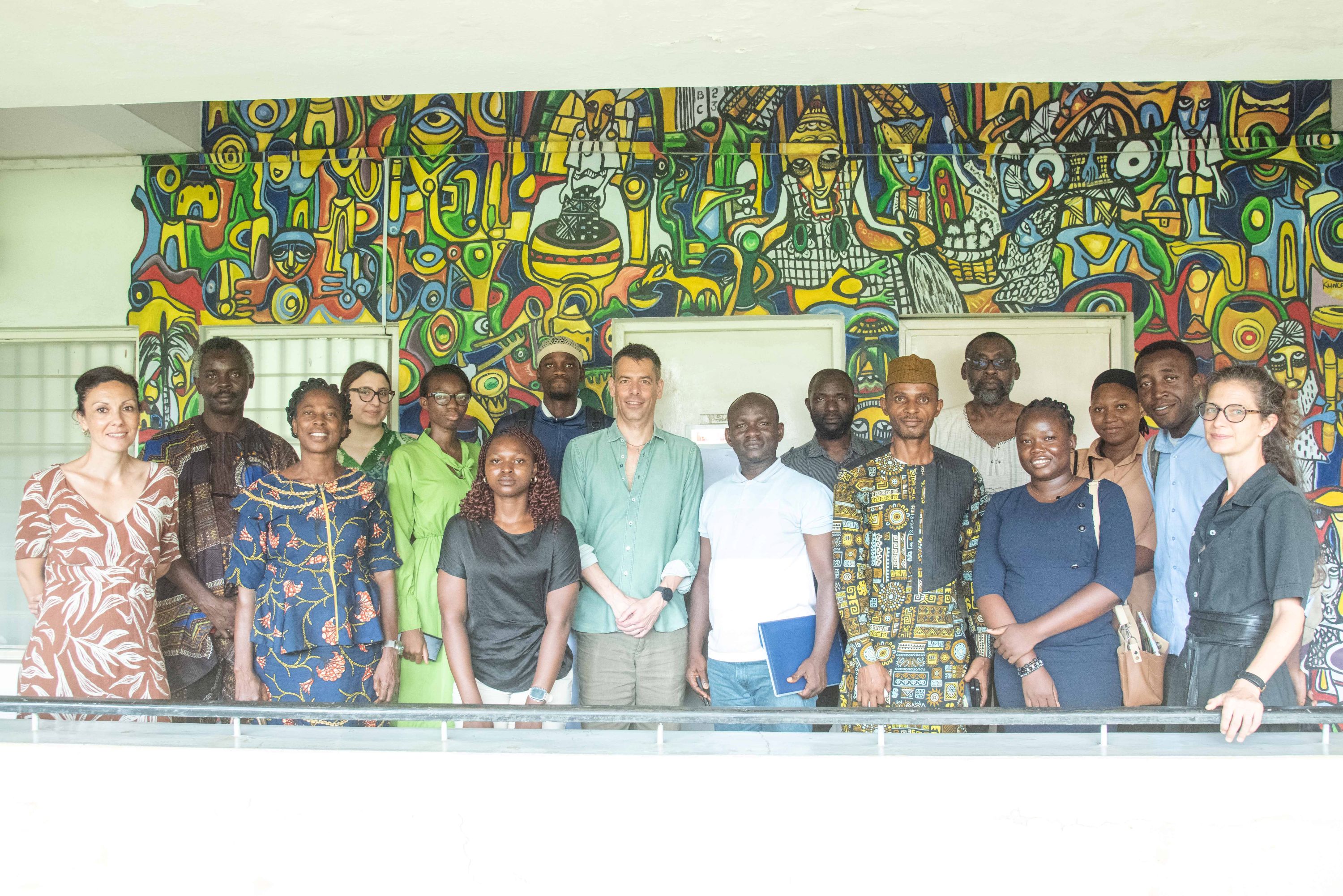
On 21 April, IFRA-Nigeria welcomed Dr Mark Van de Velde, linguist and CNRS researcher currently working at IFRA-Nigeria, for our monthly methodological seminar. His presentation focused on the “Jarawa project”, a five-year research project funded by the French National Agency for Research (ANR), which will study the languages of the Jarawan family, in North-East Nigeria.
Dr Van de Velde started by introducing the four main goals of his project:
- To make a grammatical analysis of the Jarawan languages
- To achieve a reliable external genealogical classification
- To elaborate a partial reconstruction of Proto-Jarawan
- To create a rich, publicly accessible archives of those languages
He highlighted that Nigeria, worldwide, is one of the richest countries in terms of language diversity. Therefore, there are still many which remain unknown to linguists. The Jarawan language family is composed of 14 languages, including about 10 still spoken today, with Mbula being one of the important ones.
The first evidence of the Jarawan languages comes from a 1854 book by Sigismund Wilhelm Koelle, Polyglotta Africana. This German missionary based in Sierra Leone translated a list of 250 words into 120 African languages he encountered in the country, including the Jarawan languages. This document is invaluable for linguists, but also for historians and anthropologists, as Koelle included a biography of all the speakers he met.
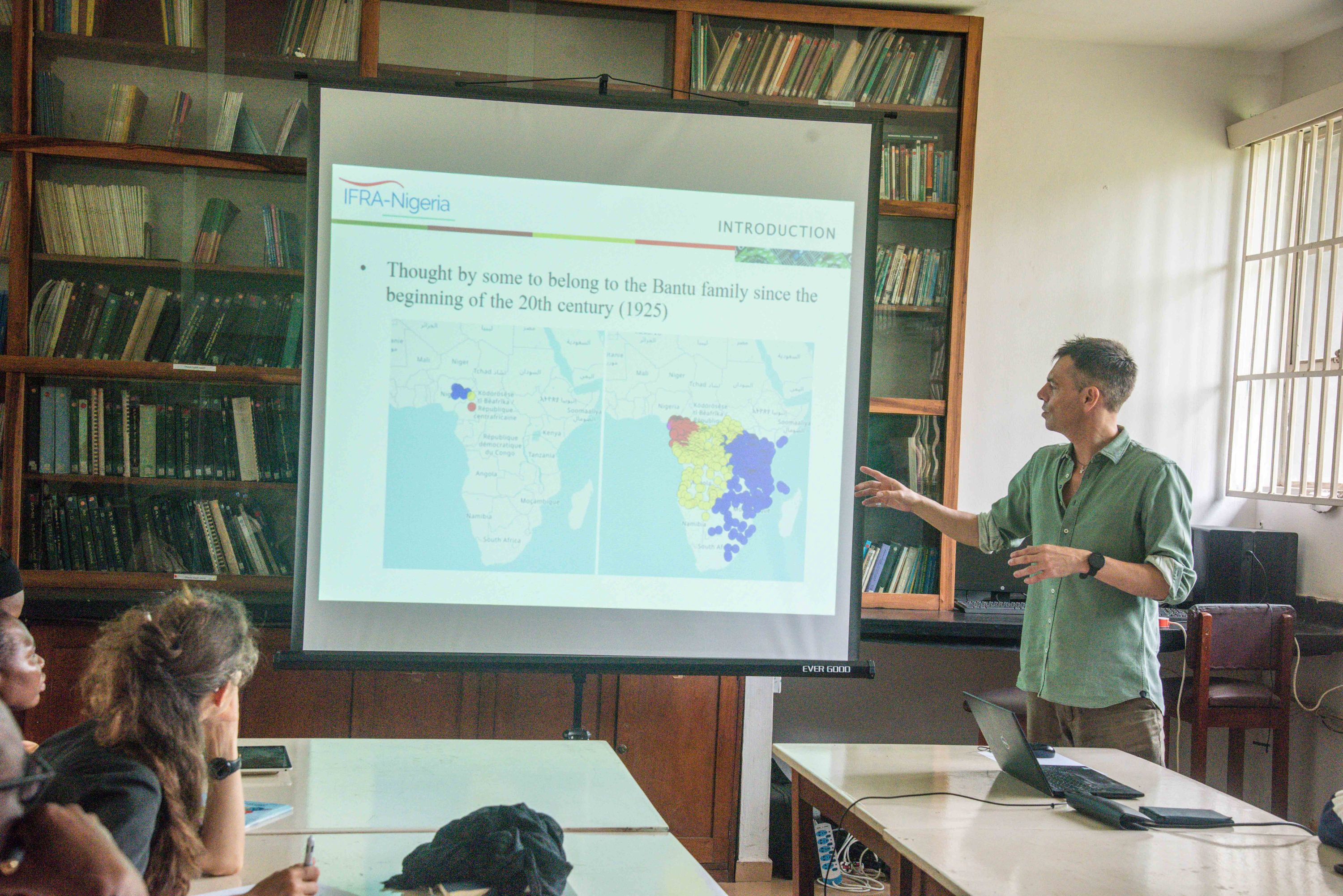
Since 1925, certain linguists have claimed that the Jarawan languages belong to the Bantu family, the largest language family in Africa. Although their grammar is very different, this hypothesis grew because of the many similar words between Jarawan and Bantu languages. Their large number eliminates the possibility of a coincidence, and given the location of the Jarawan-speaking communities, they can’t have been borrowed from Bantu languages.
Indeed, Proto-Bantu appeared somewhere between South-East Nigeria and South-West Cameroon, and spread through massive migrations to the South-East of the continent. However, Jarawan languages appear to be exceptions, as they would reflect a northern migration. Since 1925, the question of whether they should be classified as Bantu has been debated, without significant progress due to the lack of new data.
Dr Van de Velde explained his strategy to face this complex issue. First, he reframed the question to focus on what are the Jarawan languages’ closest relatives, rather than to determine whether they are Bantu. He also emphasized the importance of collecting new data from current speakers, and to rely on the comparative method, the gold-standard of linguists.
He exemplified the comparative methods in linguistics through illustrating how to determine that the proto-Bantu word for “body” is related to the word “water” in Mbula. He noted that without a rigorous comparative method, it is not possible to determine whether lookalike words are actually cognate - meaning that they share a common origin - because we do not know the sound laws that link these words to a possible common proto-language.
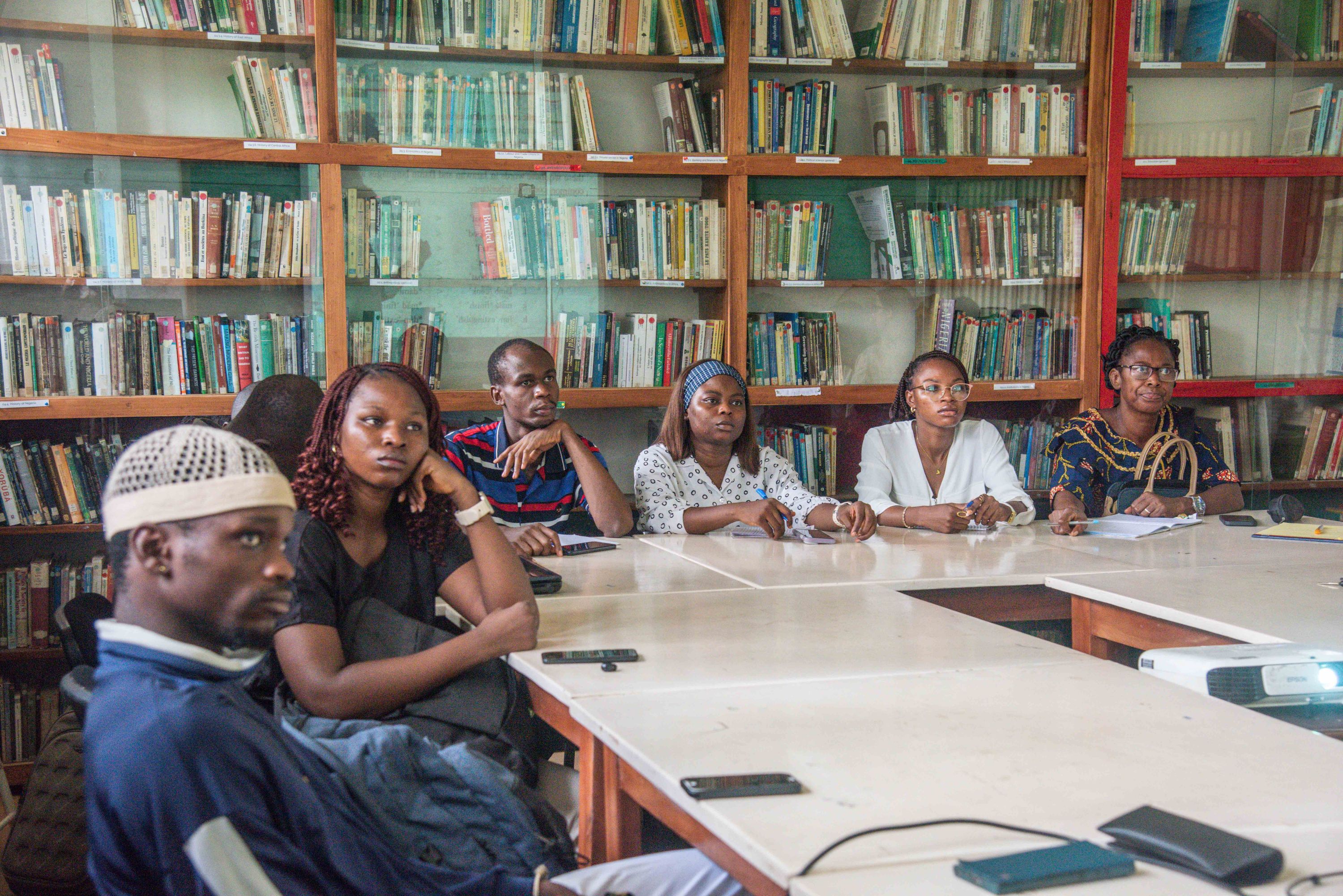
He continued with explaining the grammatical analysis aspect of his work, which is crucial as he is attempting to construct a full grammar of Mbula. A full grammar, though it can always be completed, includes both the phonology (systematic organization and patterns of speech sounds within a specific language) and morphosyntax (interaction between word structure and sentence structure).
Dr Van de Velde argues that engaging holistically with grammar is more efficient than focusing on a single aspect of the language, as all are interwoven and can’t be properly understood without one another. He exemplified this through a detailed example of his exploration of tones, in particular in the word for “me” in Mbula. Dr Van de Velde took the audience through the different steps of his investigation process, where through trial and errors, he was able to find a satisfying conclusion to the word’s changing tones.
Next, he offered very practical advice for linguists, such as beginning with only one speaker to avoid being overwhelmed by the variations, start with asking the translation of a few basic phrases, and clearly distinguish different levels of analysis (phonology, lexicon, morphosyntax) and representation (surface use, phonological, morphophonological). He also noted the importance of having a clear frame of expectations from reading the literature, while also keeping an open mind.
Finally, Dr Van de Velde concluded his presentation on the topic of linguistic documentation. It is a fairly new discipline which traces its origin to a 1998 paper, Documentary and descriptive linguistics, by Nikolaus Himmelmann. In it, he called attention to gathering, archiving and sharing data.
It is essential to create a record of the languages studied, especially those in danger, both to enhance the verifiability of published analyses but also to provide data for future linguists. These records can also be useful for other disciplines, and participate in the process to involve the community speaker, by teaching them how to use material and letting them choose what to record. He emphasized the importance of using quality audio equipment and durable format for this purpose.
Part of Dr Van de Velde’s approach is also to record daily and traditional activities, such as pottery-making. This is the “word-and-things” method, where language can connect with real-world objects, concepts or cultural contexts. These can also provide useful information to archaeologists.
Dr Pauline Guinard, IFRA-Nigeria director, was the discussant for this seminar. Her intervention was followed by a lively Q&A with the audience.
Useful tools for linguists:
Glottolog: a comprehensive catalogue of the world's languages, language families and dialects.
Reference Lexicon (Reflex): a reference lexicon of the languages of Africa, as well as various tools to exploit it.