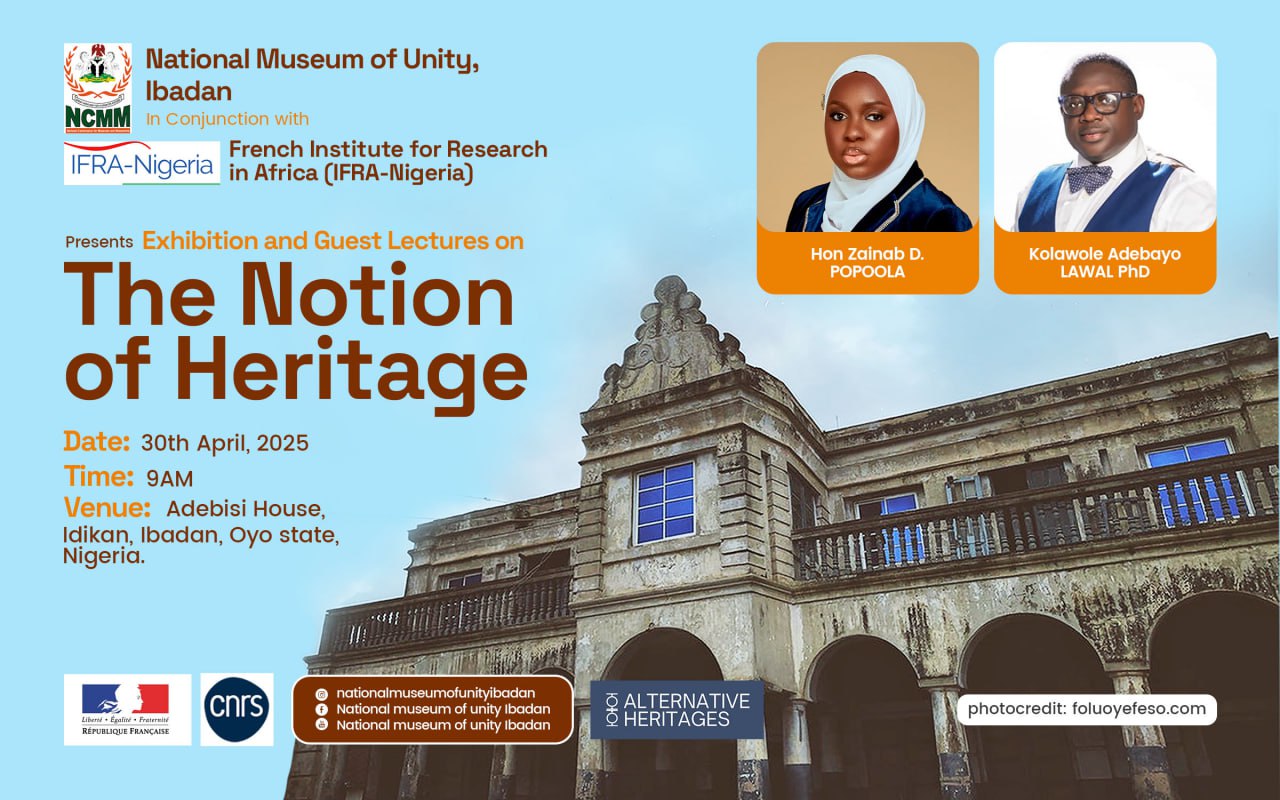
On 30 April, IFRA-Nigeria and the National Museum of Unity of Ibadan organized a mix exhibition and lecture event as part of the French Embassy Fund project "Nigerian Alternative Heritages". As a celebration of International Monument Day, this event explored the "Notion of Heritage", and took place in one of Ibadan's oldest buildings, the Adebisi House, which exceptionally opened its doors to the Museum staff, pupils, Polytechnic students and other members of the public interested in the arts and heritage studies.
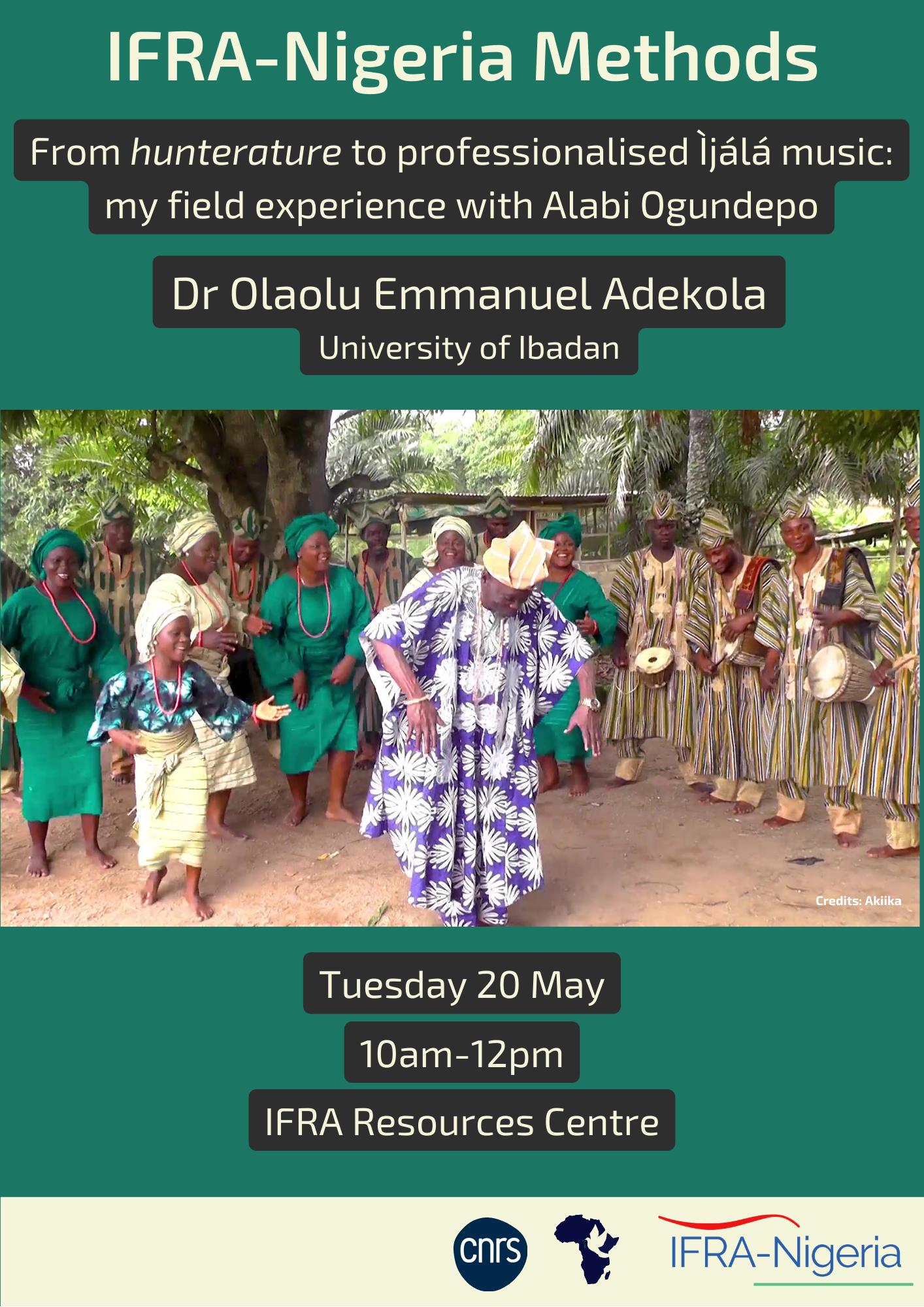
On Tuesday 20 May, IFRA-Nigeria welcomes Dr Olaolu Emmanuel Adekola, researcher at the Institute of African Studies in the University of Ibadan. Dr Adekola will take us through a presentation of his research into the world of Ìjálá music.
Indeed, the dynamic nature of African culture, especially Yorùbá culture, makes the study of music (a major aspect of culture) inexhaustible. Many African music have experienced changes in content, instrumentation, ensemble composition as well as performance context, meaning the researcher must adapt to the dynamism of his object of study. One of such music is Ìjálá, the hunters’ poetry, which also serves as an archiving house for Yorùbá philosophy, as performed by Alabi Ògúndépò. Dr Adekola's paper, on which his methodological presentation is based, examines how how Ìjálá music has evolved of the years and how Ògúndépò’s ingenuity, inventiveness and resilience have established the fact that modification on Ìjálá is an attempt to professionalize the art. He will detail his use of ethnographic research design, specifically with key informant interviews and observation to generate data. Finally, his paper argues that Alabi Ògúndépò’s artistic innovativeness and resilience contribute to making Ìjálá a professionalised traditional music and that his music serves as an archiving house through which human sociality and the cultural experience of Yorùbá is being re-conceived, reconstructed and re-contextualised for wider and broader usage.
We are proud to announce that IFRA-Nigeria will hold a panel on the theme "Living at the Margins:Survival, Belief, Care, and Belonging among Stigmatised Groups in Africa" at the 2025 Lagos Studies Association Conference. For this purpose, we call on researchers to submit abstracts on the subject of marginalisation and resilience, to get a chance to be featured in our panel.
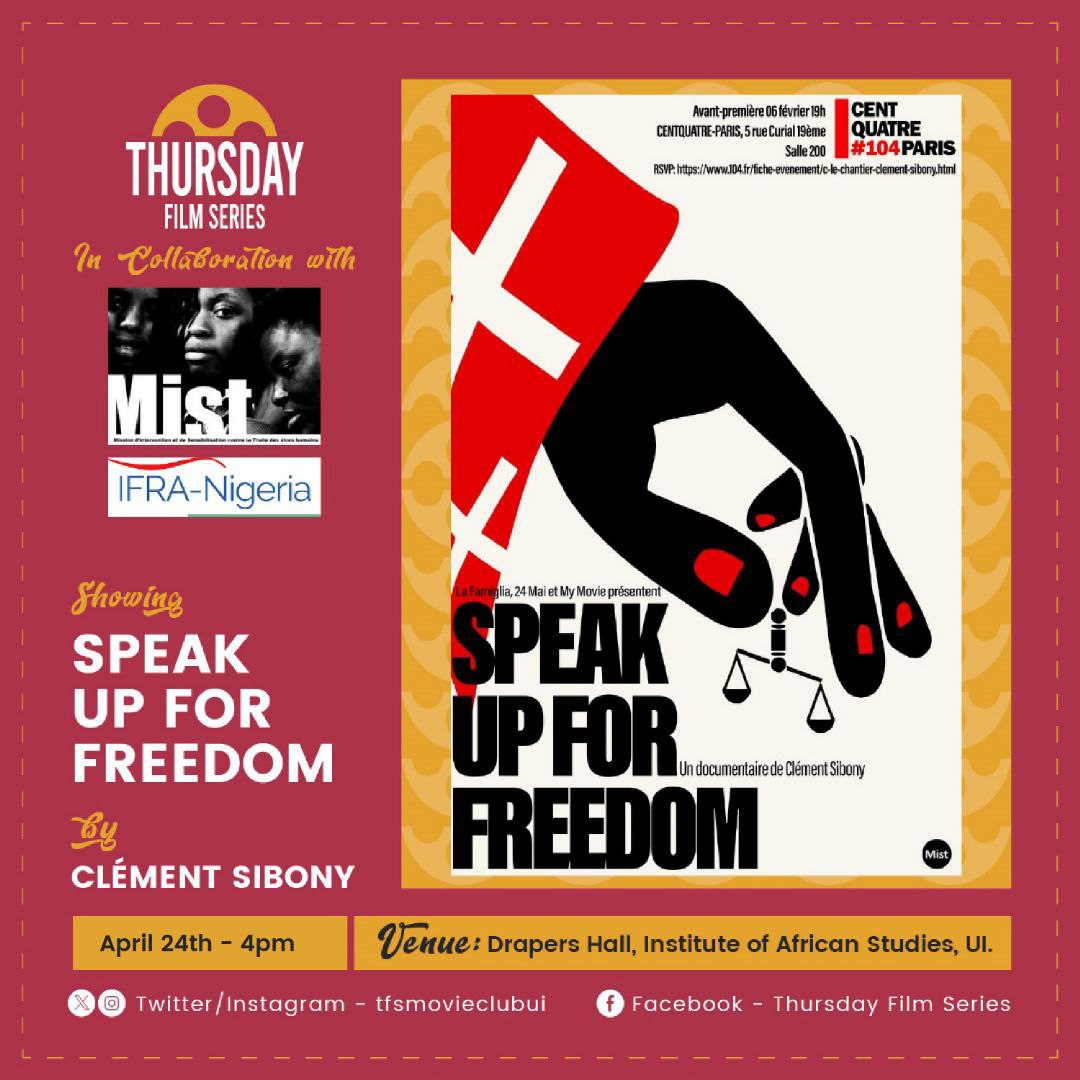
The Thursday Film Series, MIST association and IFRA-Nigeria co-organized on 24 April, a screening of "Speak up for Freedom", a documentary directed by Clément Sibony. The documentary follows six women, members of MIST, who reclaim their voice by creating a theater play. With legal justice out of reach, they stage a fictional trial, an act of defiance that transforms pain into power. Through this deeply moving documentary, we witness their journey of healing, storytelling, and resistance. MIST (Mission of Intervention and Sensitisation against Trafficking) is a French NGO founded by Nigerian women who survived sexual trafficking, and are seeking to provide support for victims.
Dr Elodie Apard, MIST board member and coordinator of the Life After Trafficking joined us for a lively post-screening discussion. We discussed the making of the documentary and the play, the role art can play in dealing with traumatic memories, the dynamics of exploitation of Nigerian women in Europe, the difficult access to justice, the role of religion and family pressure in trafficking and paths for women to build their life back. Scroll to see some pictures of this event.
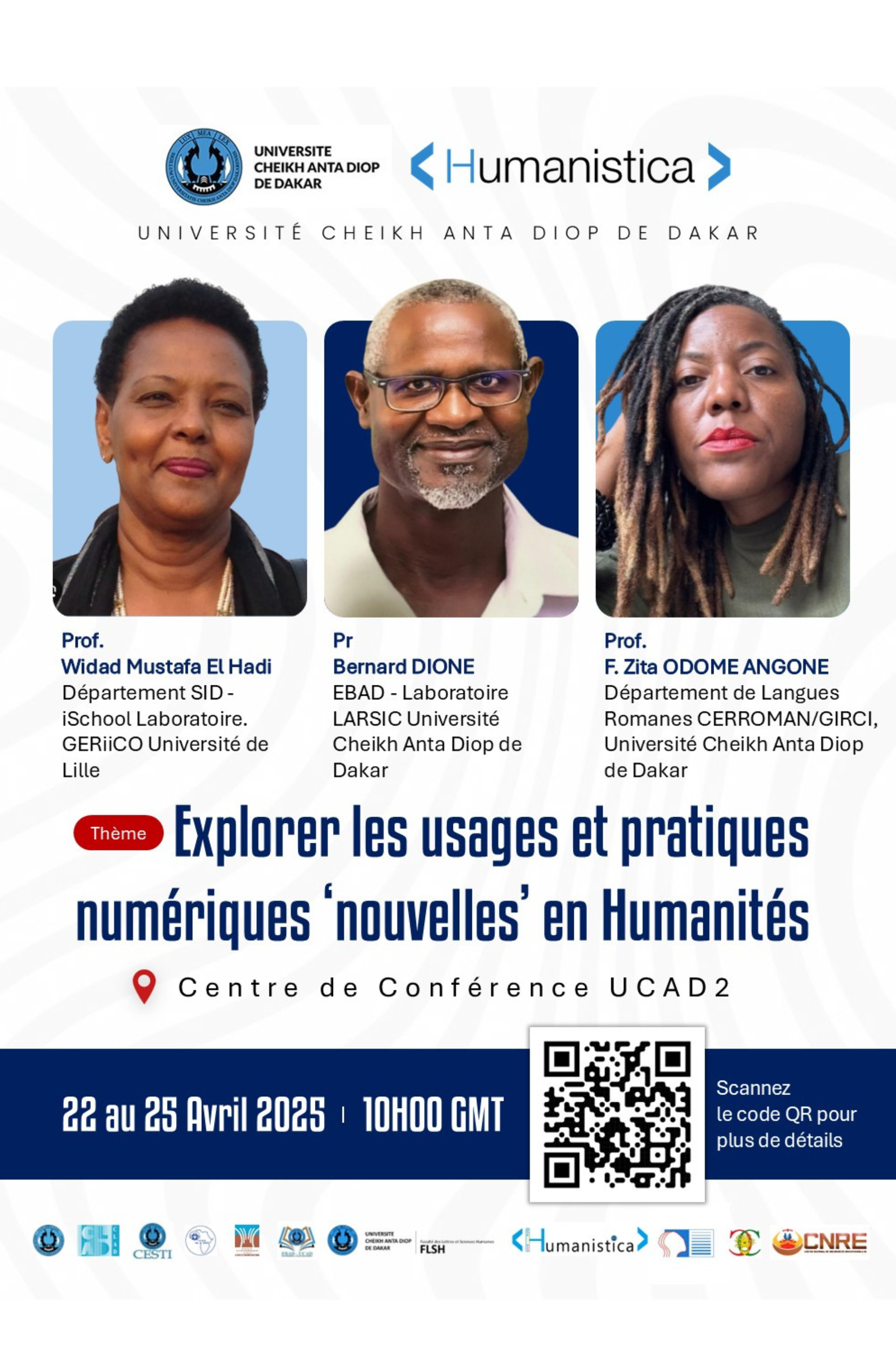
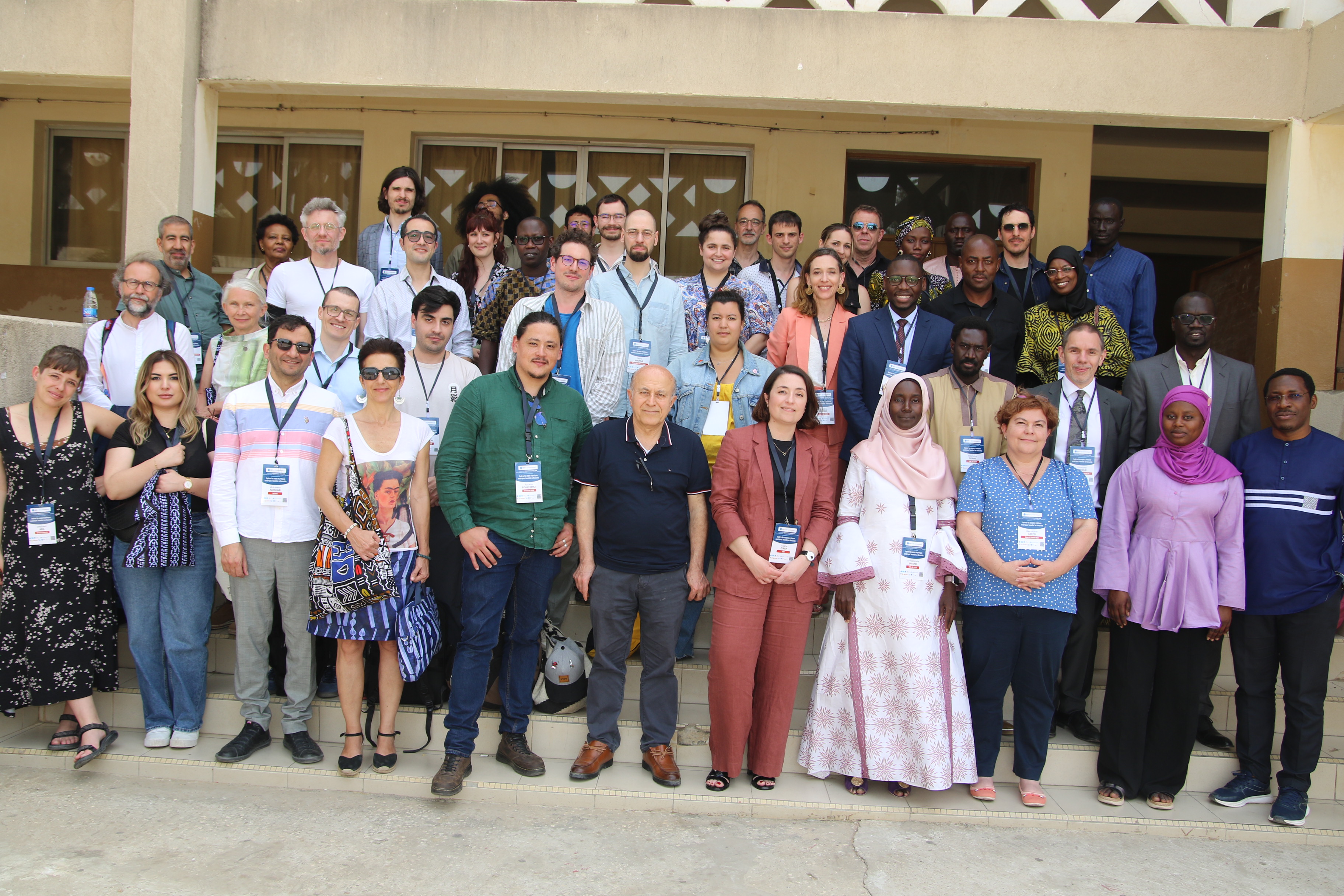
From 22 to 25 April, IFRA-Nigeria’s director, Barbara Morovich, will be in Dakar, Senegal for the Humanistica symposium on “Explorer les usages et pratiques “nouvelles” en Humanités”. This edition of the yearly symposium of the francophone association for digital humanities will question the “new” to address the tools, questions and constraints that are concretely moving the lines of research in the humanities.
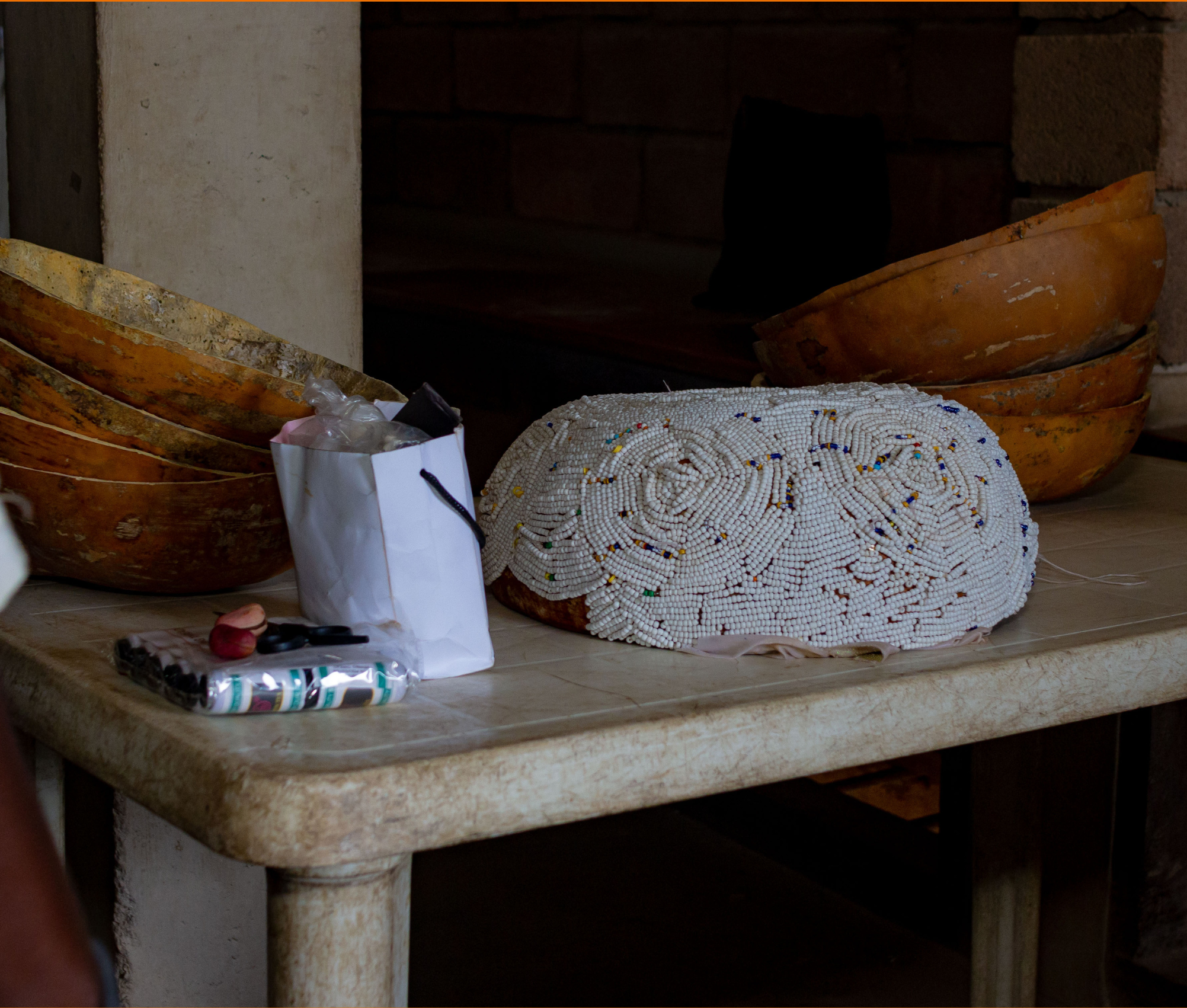
Between 14 and 19 April, IFRA-Nigeria, in collaboration with the New Culture Studio, held an artistic workshop on "Beading our stories". It featured a diverse range of activities each day for nine selected participants, including photographers, researchers, and artists. This event is part of our Alternative Heritages project, which aims to highlight the diversity of Nigerian culture. Scroll below to learn more and see some pictures of the event!
The National Museum of Unity, Ibadan and IFRA-Nigeria, cordially invite you to an Exhibition and Guest Lectures on the Notion of Heritage. Organized as part of our French Embassy Fund project Nigerian Alternative Heritages, this event seeks to facilitate meaningful dialogue and critical perspectives on the evolving concept of heritage and showcase Nigerian cultural legacy. It also aligns with the theme of the 2025 International Day for Monuments and Sites: Resilient Heritage: Adapting to a Changing World.
Starting at 9am on 30 April, there will first be a guided tour of the Adebisi House, highlighting the significant artifacts from Sanusi Adebisi Giwa's collection. Next, Hon. Zainab D. Popoola and Dr. Kolawole A. Lawal, will deliver insightful lectures addressing critical issues such as the varied and evolving meaning of heritage, the transformative nature of this concept and challenges posed to monuments and sites, including sociopolitical and economic issues, climate change, and urban development, and the role of local communities in safeguarding, conserving, and preserving cultural sites.
Practical information:
Date: Wednesday, 30 April, 2025
Time: 9:00 AM
Venue: Adebisi House, Idikan, Ibadan
Audience: This event is open to the public, including children, students, and professionals. No prior registration is required.
On 24 April, join the Thursday Film Seriesfor a screening of "Speak Up for Freedom", a powerful documentary directed by Clément Sibony. This event, in collaboration with MIST (Mission of Intervention and Sensitisation against Trafficking) and supported by IFRA-Nigeria, sheds light on one of the most harrowing realities faced by Nigerian women in Europe — human trafficking.
The film follows six Nigerian women who, having survived trafficking and sexual exploitation, reclaim their voices through theatre. With legal justice out of reach, they stage a fictional trial, an act of defiance that transforms pain into power. Through this deeply moving documentary, we witness their journey of healing, storytelling, and resistance.
Joining us for the post-screening discussion is Dr Elodie Apard, board member of MIST, researcher and coordinator of the Life after Trafficking project. Together, we will explore the intersections of art, activism, and justice, reflecting on how creative expression can challenge oppressive systems and empower survivors.
This screening is more than just a film; it is a call to action. We invite you to engage, learn, and stand in solidarity with those whose voices have been silenced for too long.
Practical Information:
Date and time: 24 April, 4 pm
Location: Draper's Hall, Institute of African Studies, University of Ibadan
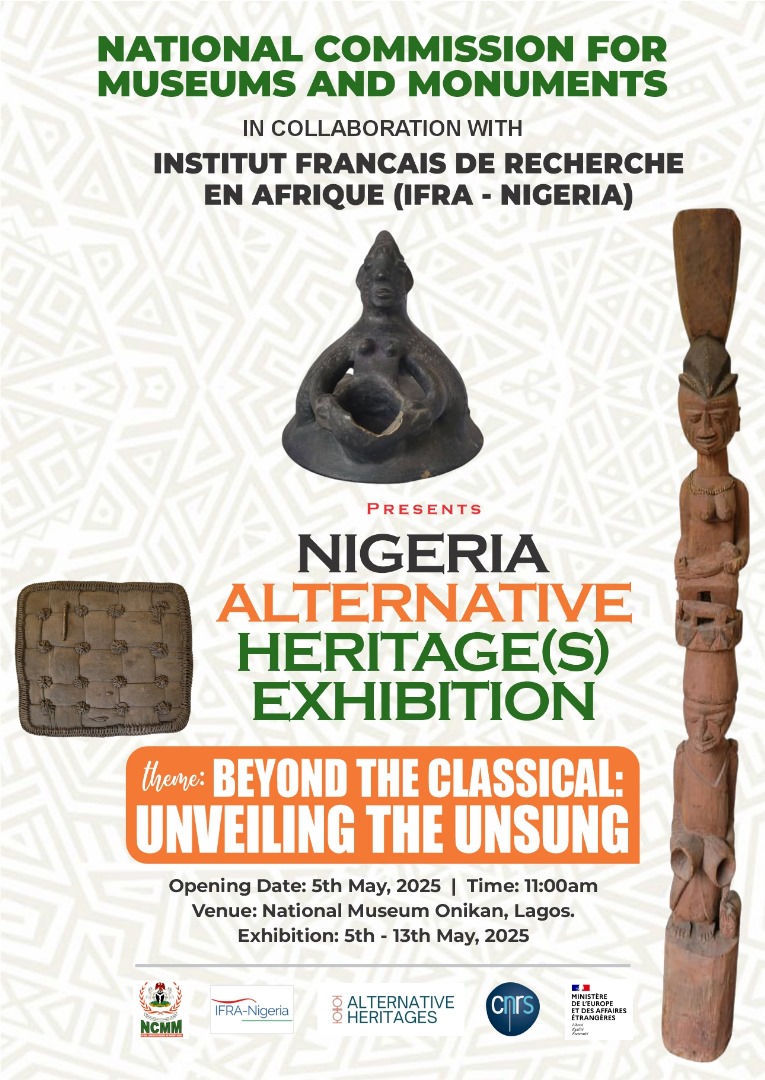
IFRA-Nigeria and the National Museum Onikan Lagos are proud to invite you to the grand opening of our exhibition "Beyond the classical: unveiling the unsung". Join us on 5 May at 11am to be the first to discover the forgotten artifacts of the Museum's archives, and discover a whole new perspective on Nigerian cultures!
This event is part of our Nigerian Alternative Heritages project, financed by the French Embassy Fund. Scroll below to learn more about this one of a kind event!
The exhibition will be open to the public from 5 to 13 May, only at the National Museum Onikan Lagos.
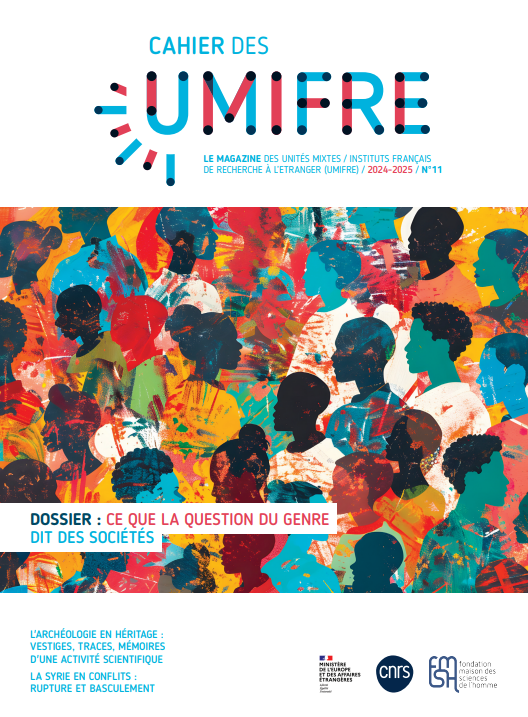
We're proud to announce the publication of the latest Cahiers des UMIFRE, the journal of France's international research institutes! This year's theme, "What does the question of gender reveal about societies?" includes our Life After Trafficking project, highlighted through the article Une étude transnationale de la traite des êtres humains du Nigéria vers l'Europe, written by its coordinators, Elodie Apard and Precious Diagboya . IFRA-Nigeria's Director, Barbara Morovich, also features for her December 2023 dialogue with architect Demas Nwoko on "Architecture for the people" at the Alliance Française in Lagos (the full conference is available on our YouTube channel).
For French speakers, you can find the Cahier on the UMIFRE's website.
Nous sommes fiers d'annoncer la publication des derniers Cahiers des UMIFRE, la revue des instituts de recherche internationaux français ! Le dossier central de cette année, « Ce que la question du genre dit des sociétés ? » inclut notre projet Life After Trafficking, mis en lumière par l'article Une étude transnationale de la traite des êtres humains du Nigéria vers l'Europe, écrit par ses coordinatrices, Elodie Apard et Precious Diagboya . La directrice de l'IFRA-Nigeria, Barbara Morovich, est également présente pour son dialogue de décembre 2023 avec l'architecte Demas Nwoko sur « L'architecture pour le peuple » à l'Alliance française de Lagos (l'intégralité de la conférence est disponible sur notre chaîne YouTube).
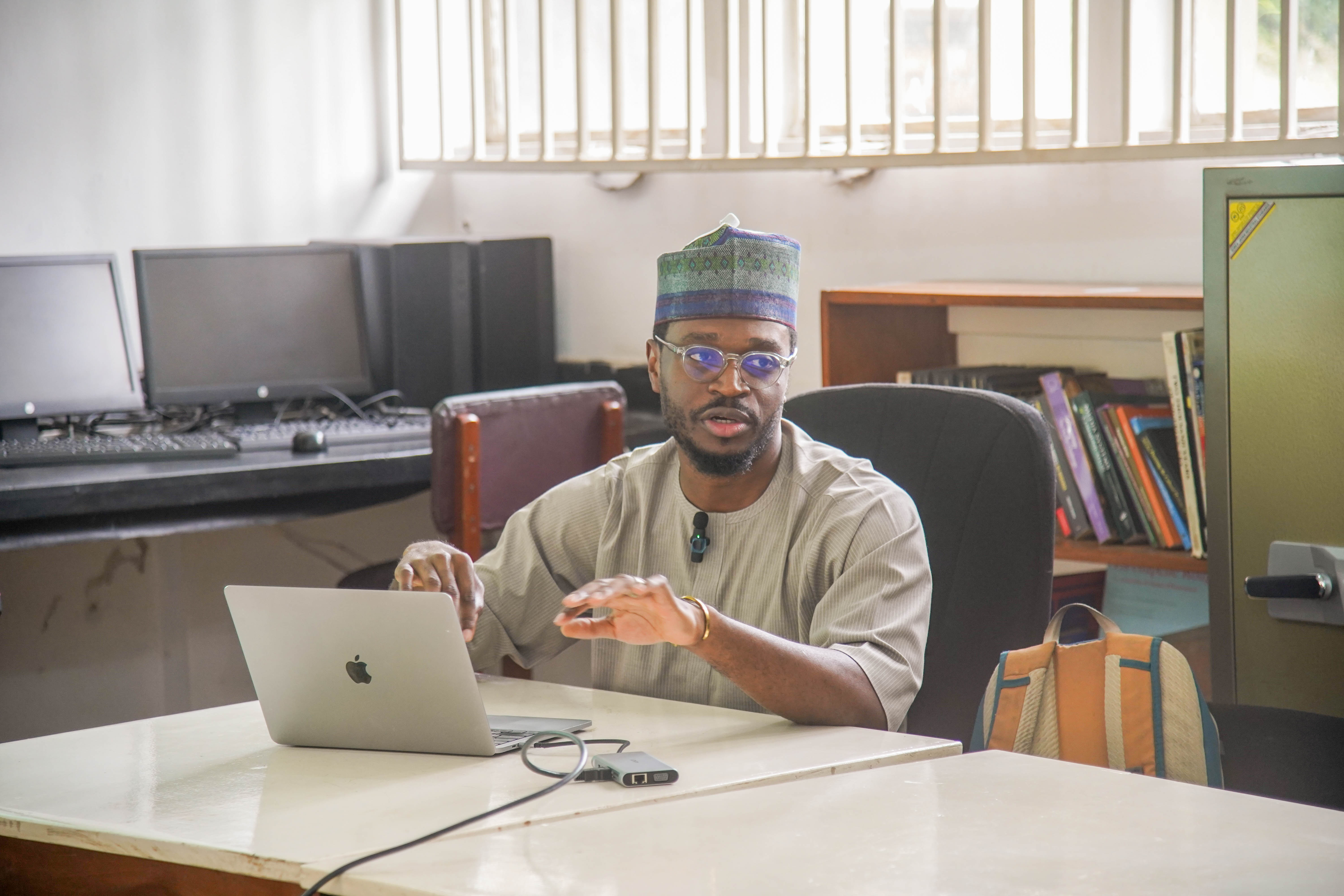
On 15 April, we welcomed Dr Sa'eed Husaini from the Centre for Democracy and Development in Abuja for our latest Methodological Seminar "On glass-eating priests and political party structures in Nigeria". Reflecting on his PhD research in Zaria and most of all Ekiti states, he highlighted how to manage positionality as a researcher in contact with political parties. Describing more specifically his own work, he also encouraged the attendants to question the dominant discourses of academia, which may not be as neutral as it appears.
Scroll below for a full summary of Dr Husaini's presentation.
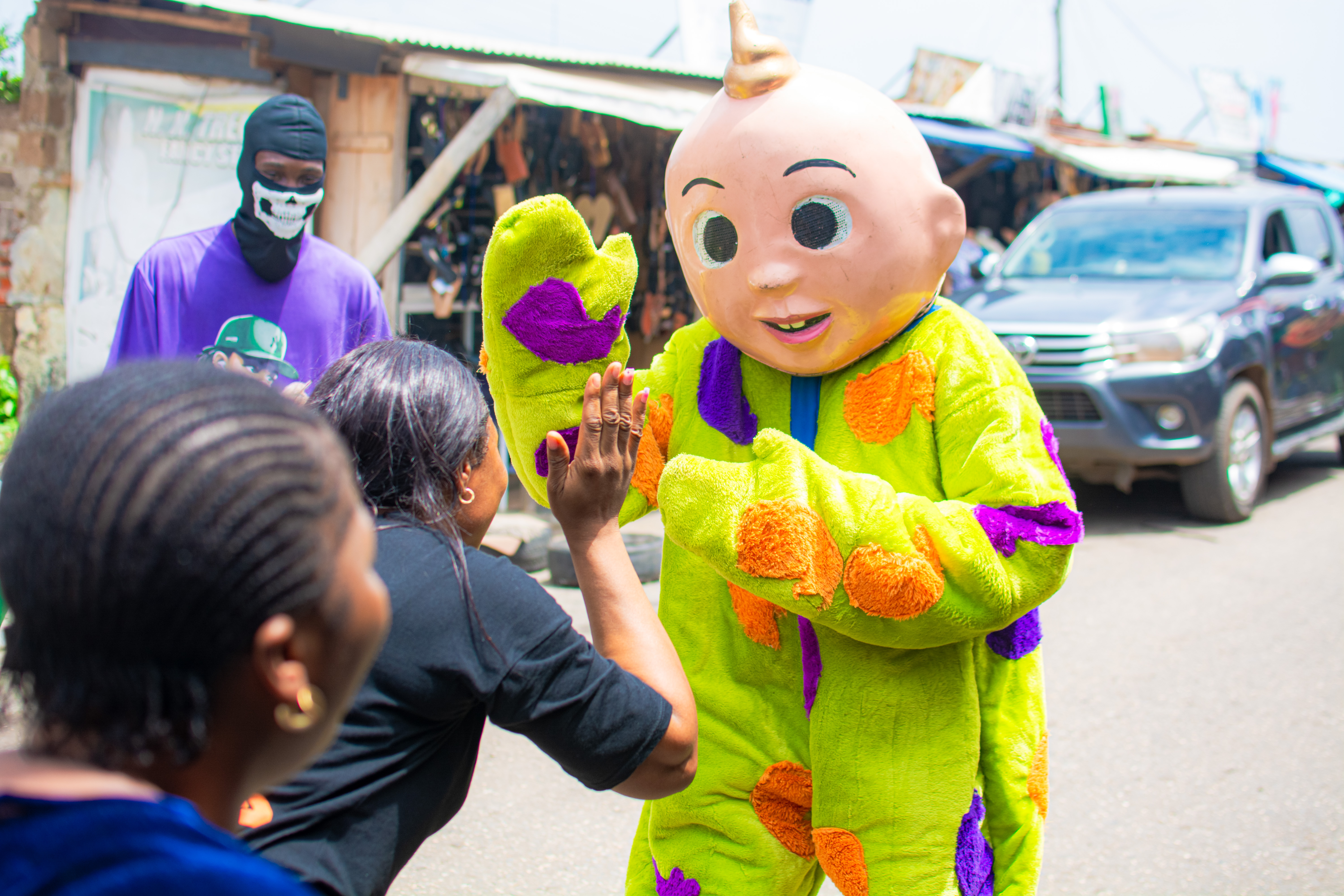
On 3 April, Ibadan came alive with music and dance as a vibrant parade made its way through the city — the National Museum of Unity's rally, offering a creative and engaging way to promote awareness of the museum’s activities. This celebration of culture was organized as part of IFRA-Nigeria's Alternative Heritages project, recipient of the French Embassy Fund (FEF). Scroll to see some pictures of this lively event!
Between 8 and 9 April, IFAS-Research in collaboration with IFRA-Nigeria, the History Workshop of Witwatersrand University, the University of Lille and the Worker's Museum of Johannesburg, organized a two-day workshop on the theme "Alternative Archives: Methods and objectives. Conversations between South Africa and Nigeria". This event brought together a diverse group of voices to engage in meaningful discussions about archives—both digital and non-digital—and their role in shaping history. More specifically, they focused on how to preserve non-institutional archives, non-colonial, and recovering forgotten or suppressed narratives.
Three of IFRA-Nigeria's collaborators also shared their work on archival preservation. Olushola Patrick Babalola, our documentalist and archivist, presented his efforts in training archivists in new techniques, alongside his own digitisation projects. In addition, two coordinators of our Alternative Archives Project highlighted their preservation initiatives, both within the project framework and through their individual research. Femi Olanrewaju showcased his work on preserving traditional architecture in Ibadan, while Dr Sa'eed Husaini discussed his project focused on the digitisation of militant archives. Scroll below to see pictures of this great event!
Between 19 and 27 March 2025, IFRA-Nigeria's Deputy Director Delphine Manetta, was on a mission at Uppsala University in Sweden. There she met with the anthropological department of the University and participated in two events.
We had the pleasure to welcome Dr Abiola Ayodokun for a Methodological Seminar on 8 April, on the theme "Ethnography of gender in charcoal production". Dr Ayodokun presented the work she carried out for her PhD presentation, and the challenges she had to face to be accepted in the traditional communities she studied. She described how she needed to account for cultural sensitivities, religion and the use of working with a research assistant who could open doors.
This Seminar was a very interactive one, with fellow researchers and students sharing their questions, experiences and opinions on the topic of positionality and how to adapt to different cultural norms. You can scroll to read a full summary of Dr Ayodokun's presentation.

 On 30 April, IFRA-Nigeria and the National Museum of Unity of Ibadan organized a mix exhibition and lecture event as part of the French Embassy Fund project "Nigerian Alternative Heritages". As a celebration of International Monument Day, this event explored the "Notion of Heritage", and took place in one of Ibadan's oldest buildings, the Adebisi House, which exceptionally opened its doors to the Museum staff, pupils, Polytechnic students and other members of the public interested in the arts and heritage studies.
 On Tuesday 20 May, IFRA-Nigeria welcomes Dr Olaolu Emmanuel Adekola, researcher at the Institute of African Studies in the University of Ibadan. Dr Adekola will take us through a presentation of his research into the world of
 ![[CLOSED] Call for abstracts - "Living at the margins" IFRA-Nigeria panel at LSA 2025](/images/logos/IFRA%20Nigeria_Intro%20call.png)


 From 22 to 25 April, IFRA-Nigeria’s director, Barbara Morovich, will be in Dakar, Senegal for the
  Between 14 and 19 April, IFRA-Nigeria, in collaboration with the
  On 24 April, join the
  IFRA-Nigeria and the National Museum Onikan Lagos are proud to invite you to the grand opening of our exhibition "Beyond the classical: unveiling the unsung". Join us on 5 May at 11am to be the first to discover the forgotten artifacts of the Museum's archives, and discover a whole new perspective on Nigerian cultures!
 (French below)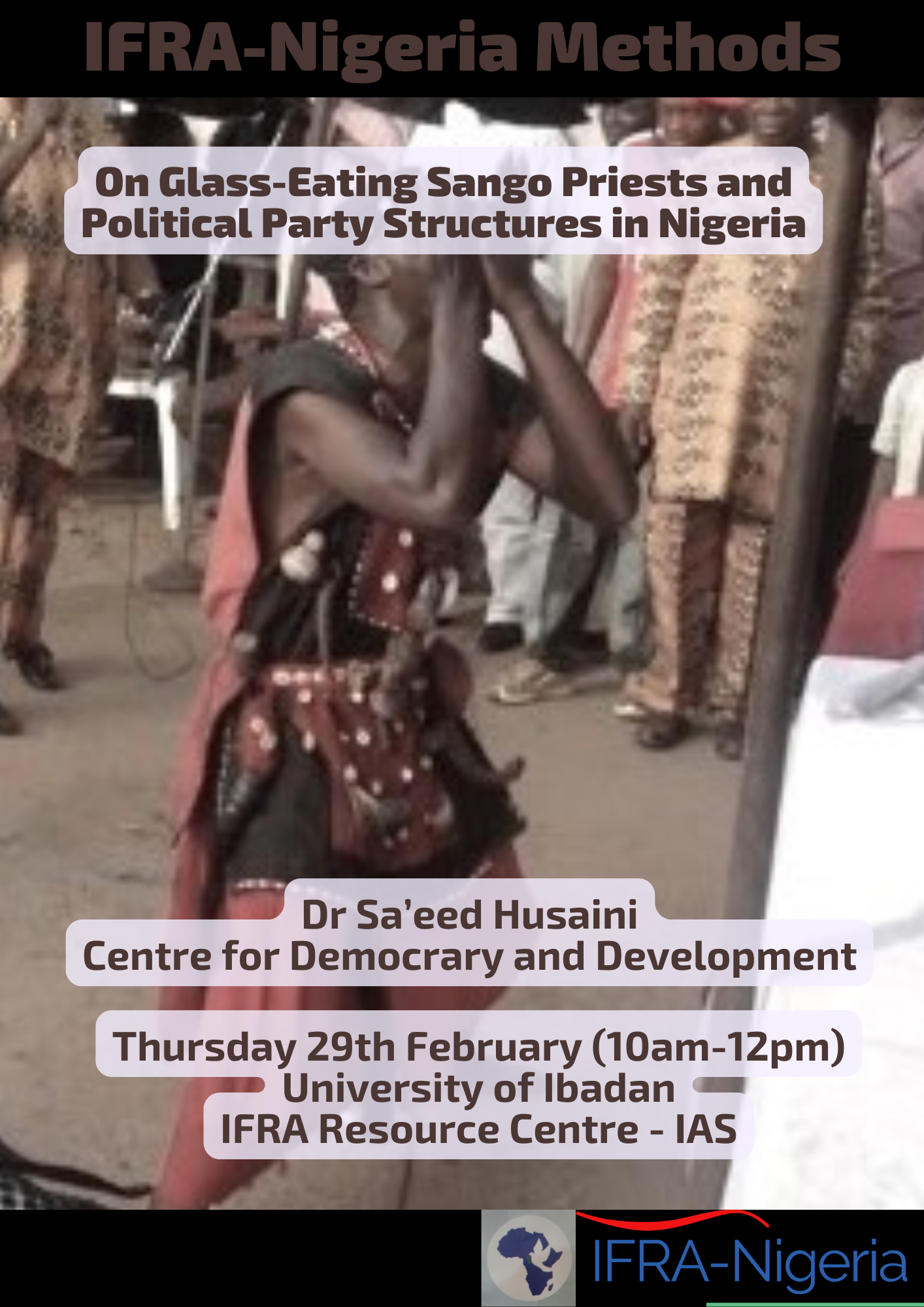
 On 15 April, we welcomed Dr Sa'eed Husaini from the
  On 3 April, Ibadan came alive with music and dance as a vibrant parade made its way through the city — the National Museum of Unity's rally, offering a creative and engaging way to promote awareness of the museum’s activities. This celebration of culture was organized as part of IFRA-Nigeria's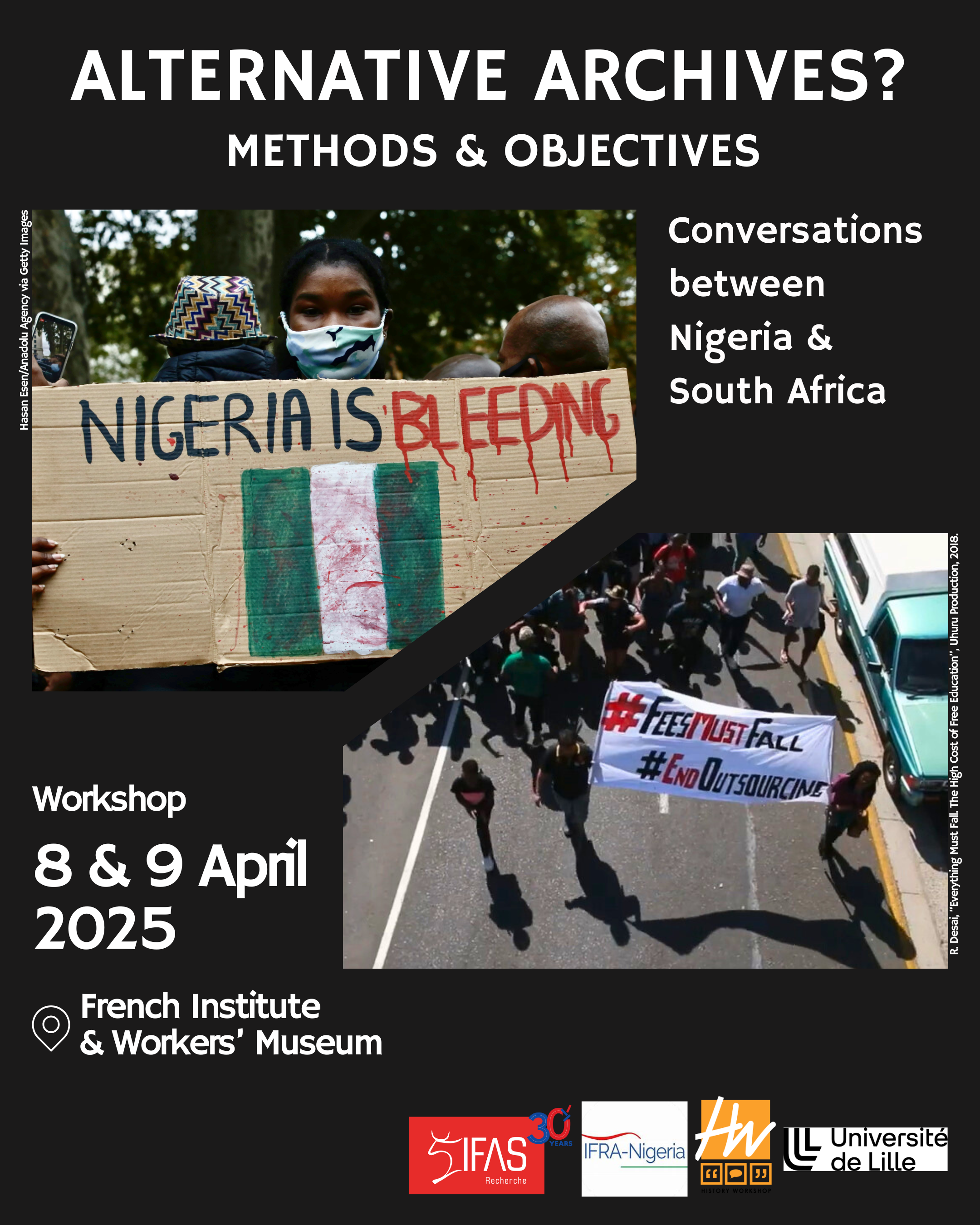
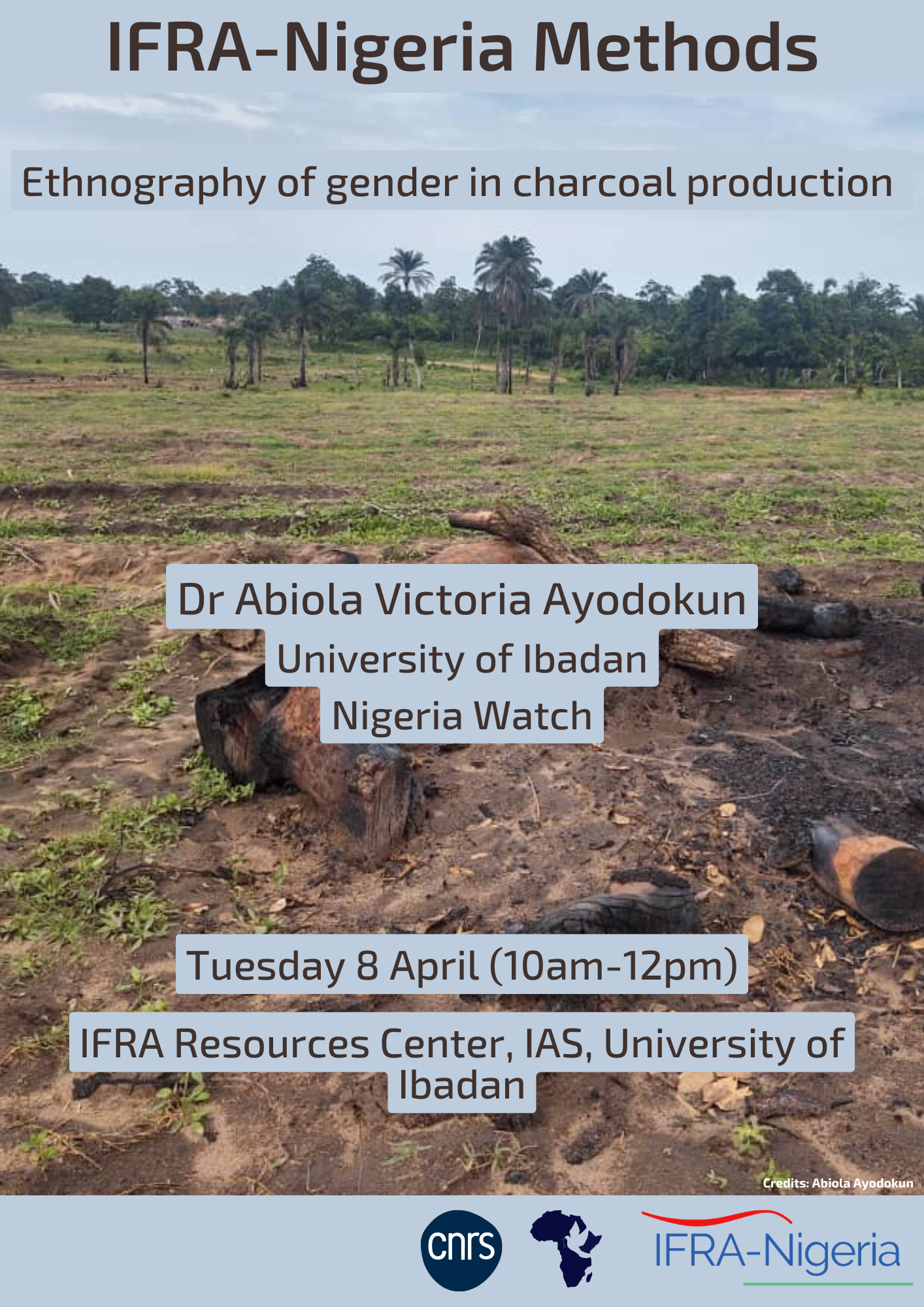
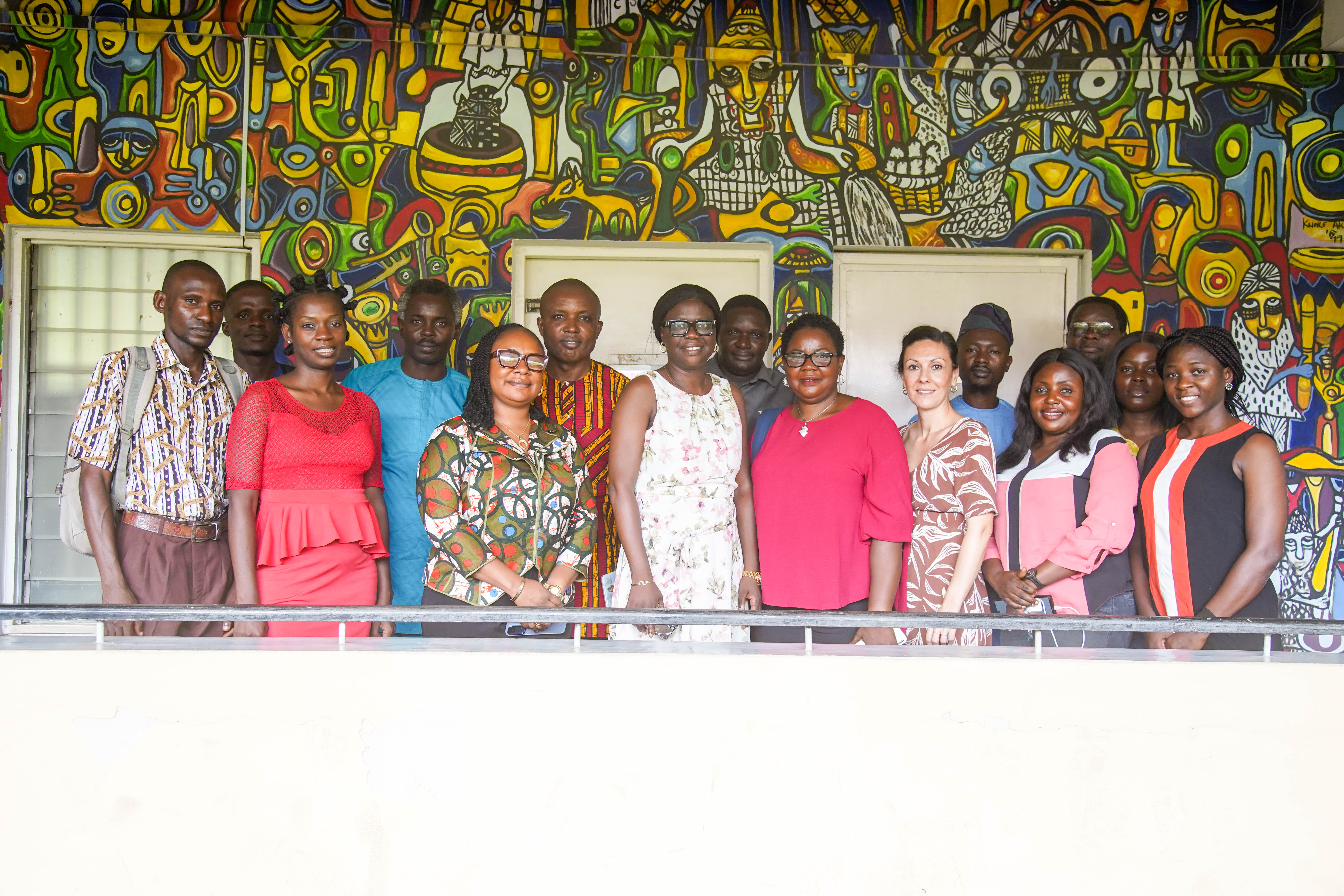 We had the pleasure to welcome Dr Abiola Ayodokun for a Methodological Seminar on 8 April, on the theme "Ethnography of gender in charcoal production". Dr Ayodokun presented the work she carried out for her PhD presentation, and the challenges she had to face to be accepted in the traditional communities she studied. She described how she needed to account for cultural sensitivities, religion and the use of working with a research assistant who could open doors.